This is an old revision of the document!
Ancestries
Below are all available ancestries. Many also have an optional novice path tied to them. It's not that the dwarf novice path makes you dwarfier than other dwarves, it's just a way to enhance your natural traits by training or happenstance. They are just another option.
Aasimar
 Aasimar bear within their souls the light of the heavens. They are descended from humans with a touch of the power of celestials, creatures who live among the good planes, mostly on Mount Celestia, the divine realm of many lawful good deities. Aasimar are sometimes born to serve as champions of the gods, their births hailed as blessed events. They are a people of otherworldly visages, with luminous features that reveal their celestial heritage.
Divine Callings and Angelic Duties
Aasimar appearances and abilities are based on which line of angels helped make them and what category of higher calling (sometimes known as a heavenly virtue) this drives them towards. While Aasimar have a connection and impulse related to this calling, this does not mean they are defined by it or appreciate this intrusion on their free will.
Asrial (Patience)
Asriael Aasimar typically have many faces, their front, side and back of heads having faces on them and sometimes other body parts also having another face that all speak and move in unison. The virtue of Patience is about a willingness to forgive and show mercy, the ability to remain calm and wait, for sometimes it is better to wait for something to occur to make it so yourself. Asrial aasimar often live twice as long as other aasimar. A patient higher calling could involve helping solve a mystery and determine the appropriate punishment, help slowly guide events or teach mercy to others.
Gabrael (Diligence)
Gabrael Aasimar are generally humanlike, but often possess more than two eyes, additional fingers or ocassionally additional arms and hands. The virtue of diligence involves staying true to core beliefs, working carefully and being steadfast. Diligent higher callings involve working hard to accomplish tasks, or accomplishing large, time-consuming quests.
Mikael (Charity)
Mikael Aasimar appear as normal humans but with oddly colored skin and bright glowing eyes. The virtue of Charity is about giving to help others. Generosity, self-sacrifice, Charity is more than benevolent giving, it's about giving up of yourself to help others. A charitable higher power could involve giving up what you have gained to help others, becoming a martyr, or helping all others no matter what the price to yourself.
Rafael (Humility)
Rafael Aasimar are humanlike with wings and are what many think of when they hear the word “angel” while they are not actually angels themselves. The virtue of Humility is about not needing to prove oneself, being selfless and understanding ones role and place. Their higher calling can be to serve as a messenger much like angels, play an integral supporting role in a team or serve as a ruler with propriety and an understanding of their duties.
Ramiael (Kindness)
Ramiael Aasimar typically appear as humans with pale, glowing skin and multiple ears and they are sometimes born without mouths. The virtue of Kindness is about wishing the best of all and viewing all as worthy of care, compassion and friendship for its own sake. Empathy and trust without prejudice or resentment. A charitable higher power could involve creating an orphanage or providing an example of kindness to all during travel.
Samael (Temperance)
Samael Aasimar are typically very inhuman, featuring multiple, oddly shaped heads, oddly shaped bodies, eyes of fire and skin of multiple colors and textures. The virtue of Temperance is about restraint, justice and avoiding extremism. Moderation and fairness are important. A temperence higher power could involve bringing people to justice or bringing moderation to a political conflict.
Uriael (Chastity)
Uriael Aasimar are the most inhuman of the aasimar, sometimes lacking facial features, often lacking sexual organs, they frequently have no hair anywhere on their body. The virtue of Chastity does not always mean refraining from sex, Chastity is about resisting all temptation. A chaste higher calling may involve removing drug dens or brothels or removing corruption from the nobility.
Aasimar Traits
- Size: 1
- Speed: 5
- Immune: disease, exposure, infection
- Divine Attribute: Choose one of your attributes and increase its score by 1.
- Divine Heritage: Upon reaching adulthood, you show no signs of growing older. Your wounds heal without leaving scars and, after a rest, you regrow any severed body parts. You live until killed by mishap or violence, after which the god who made you takes your body.
- Divine Providence: You make Luck rolls with 1 boon. When you fail a luck roll, immediately turn the failure into a success. When you do so, you lose access to this talent until after you rest.
Aasimar Novice Path
Level 1 Aasimar
Suggested Attributes: Assign 11, 11, 11, and 10 to your attributes and then apply Divine Attribute.
Natural Defense: 11
Health: 14
Languages: Common
Traditions: One associated with the divine attribute or deity you are connected with.
Spells: One novice
- Divine Birthright: (Magical): You announce your divine connection as a warning to all who can hear it. Choose any number of creatures that can see you, hear you, and are within 10 yards. For each target separately, make an Intellect or Will roll against its Will. You roll with 1 boon if you know the target fails to live up to your associated heavenly virtue (A vain wizard for Humility, a greedy guard for Charity, etc). On a success, the target becomes impaired in an attribute of your choice (luck ends), or cursed (luck ends). You can use this talent a number of times equal to half your level. You regain expended uses after you rest.
- Preternatural Skill: You ignore the requirements for wearing armor and using weapons. You roll to attack with 1 boon. Additionally, when you get a success on a roll to attack, you may apply the effects of an attack option as if you declared the option and exceeded the target's attribute score by 5. You do not forgo weapon damage on this attack. Once you use this aspect you lose access to this aspect of the talent for 1 minute.
Level 2 Aasimar
Health: +4
Bonus Damage: +1d6
Spells: One novice
- Divine Recovery: You can use an action to heal half your damage total. Then, for 1 minute, you take half damage from all sources. You regain use of this talent after you rest.
Level 5 Aasimar
Health: +4
Spells: One expert
Bonus Damage: +1d6
- Divine Intercession (Magical): When you make an attribute roll, make a luck roll as well. You get a success if either result is a success, and a critical success if both are successes. You can use this talent a number of times equal to half your level. You regain expended uses after you rest.
Lore
Celestial Blood
All Aasimar have celestial blood and are sometimes created by a Celestial being in order for them to serve a purpose on the Material Plane. From an early age, aasimars often receive visions and guidance from celestial entities via dreams. These dreams help shape them and attempt to give them a sense of destiny and desire for righteousness. Usually there is a single celestial agent as a guide in these dreams. This entity is typically a deva. Not all aasimar receive these visions and callings, but those more purposefully created by one of these celestial powers typically do.
Some Aasimar embrace this purpose, becoming champions of justice, fulfilling prophecies and protecting the weak. Others resent their lineage and chosen destinies, feeling that they were born to be nothing more than a tool or railroaded onto a life they do not want to live. Those without these visions or callings can feel resentment or abandonment or feel they have done something to cause this lack of divine support. In truth, there are many celestials and many reasons aasimar come into being, some are due to an ancestor being an aasimar or a parent passing through a divine plane or near some sort of great magic.
Aasimar have physical traits that reflect their celestial heritage, including multiple eyes, glowing white skin, a halo or other ornament and symbols floating above their head, multiple arms, wings, shining white eyes, pale colored skin, etc. The more inhuman have no faces, odd shapes instead of heads, multiple heads, strangely formed bodies or other inhumanly terrifying appearances.
A Higher Calling
Aasimar are chosen for and sometimes drawn to higher callings, this calling is often associated with what classification of celestial being birthed them. Note that not all births are biological, as sometimes “virgin” births are created by the aasimar. These “callings” are related to the source of their celstial blood and affects them even if they never have any contact with the divine themselves.
These higher callings drive even those aasimar who reject their heritage. The virtue that drives their celestial heritage becomes an inexorable part of their personality and those who try to fight it may find themselves very conflicted and will resent that aspect of their personality. Those who embrace this heritage will find themselves helped along their journey by the heavens and are made fit for the mission they are on.
“I knew he was trouble, never trust an Aasimar I say!“
Sure, some of them are good cutters. Regular folk like you and me, will go out tryin' the taps with any ol' one. Those're practically Time Mephits though! Most of them are runnin' around trumpetin' the archons! They're always traipsin' about the upper planes lookin' down on all us normal folk. Doin' “holy” callin's and meetin' with all the angels and the outsiders, I wish they'd just stay down in the faith mines and leave us common folk to our good, honest thievin' — not that I was doing any of the thievin' I was accused of today.
I'm not sayin' I've never taken anything, I am a yugoloth after all, but I know the rules when I'm in the cage. I follow them, and everything he just said was a bunch of flam! You know his type, they all got their celestial fingerpaints, he just made it look like me. He just fingered me because I'm from a lower plane! This is discrimination! I'm not from Carceri! I'm from Gehenna! We're mostly lawful!
— Lin Jo, Fence for the Bloody Cogs,
Court transcript after the testimony of Ashia, an Aasimar member of the Fraternity of Order.
Conflicted Souls
Despite having celestial blood, an aasimar is still mortal and possesses full free will. Many will follow their ordained path, but some grow to see their abilities as a curse. These aasimar tend to become disaffected, but live normal lives. Others become evil, others find their heritage a form of brainwashing and seek revenge. As they do have full free will, they feel this forced calling.
Even aasimar wholly dedicated to good sometimes are torn between two worlds. The celestials who guide them see the world in a much larger view than they do, an aasimar who wishes to help a town recover from a deadly draught might be told by their guide that they must move onward in their quest. To a distant angel, saving a few commoners might pale in comparison to quickly defeating a deadly cult. An aasimar's guide is wise, but not infallible and has the greater good in mind.
Aasimar Names
Most aasimar are born from human parents, and they use the same naming conventions as their native culture. Those born within the planes or recognized at birth as Aasimar are often given more divine names, such as those of Saints or virtues such as Charity.
~~hero-subtitle Living plants ~~
Adharita
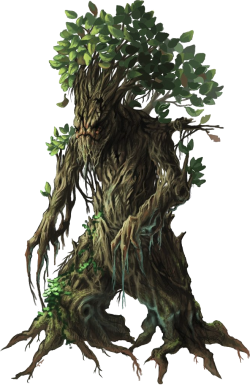
Adharita are as varied as the plants of Aldrea. Strongly connected to nature and the Elemental Plane of Wood, some researchers believe them to be offshoots of Wood Elementals due to their similar appearances.
Adharita Traits
- Size: 1
- Speed: 5
- Additional Descriptor: Plant
- Languages: Common
- Natural Defense: +1
- Natural Weapons: You can use parts of your plant body as a Nimble natural melee weapons that each deal 1d6 damage.
- Plant Bond: While you are within 5 yards of any plant, you have the Awareness 5 trait.
- Plant Form: On your turn, if you are on a surface made from earth, you can use this trait to reduce your Speed to 0. The effect lasts until you end it (not an action) or become unconscious. While subject to this trait, you ignore any ordinary effect that would move you. To all others, you appear to be a normal plant.
- Flammable: You take double damage from fire. You roll to over come being on fire with 1 bane.
Adharita Novice Path
Level 1 Adharita
Suggested Attributes: Strength 12, Agility 9, Intellect 10, Will 12
Natural Defense: 11 (includes the increase from your ancestry trait)
Health: 14
Languages: Common and one other langauge
Traditions: Two
- Plant Strike (Magical): You can use this talent when you attack with your natural weapons. You can target a creature on the ground or within reach of an ordinary plant within 5 yards of you. On a critical success, the target becomes held until the start of your next turn.
Level 2 Adharita
- Natural Defense: +1
- Health: +4
- Bonus Damage: +1d6
- Spells: Two novice
- Wild Recovery (Magical): You can use an action to heal half your damage total and turn the ground within 5 yards of you into challenging terrain that remains for 1 minute. Any enemy that ends its turn on challenging terrain created by this talent takes 1d6 damage, or 2d6 damage if prone. Once you use this talent, you lose access to it until after you rest.
Level 5 Adharita
- Natural Defense: +1
- Health: +4
- Spells: one expert
- Grow the Woods (Magical): You can use an action to cause plants to grow up from the ground all around you. Target up to six Size 1 spaces on the ground within 10 yards: from each space erupts a thorny, grasping plant. Any creature in the tar get space makes an Agility roll. On a success, the creature is pushed to the nearest empty space of its Size of your choice. On a failure, the creature takes 2d6 damage and becomes held (luck ends). It can overcome this effect with a successful Strength roll. The growth remains until destroyed (Health 10) or until you use this talent again. You can use this talent three times. You regain expended uses after you rest.
Lore
Ancient Roots
It is believed that Adharita were among the first creatures to move across the surface of Aldrea-muvarin. It is said the first Adharita were born of a powerful surge from the elemental_plane_of_wood, awakening ordinary plants to sentience. There are adharita all over the planet now and some of the older Adharita spend much of their time dormant, appearing as oddly shaped plants, only awakening when needed.
Because of their age and their connection to nature, Adharita are highly valued as guides in the wilderness and many act as stewards of nature, stepping in when other races may throw an ecosystem out of balance or endanger a forest.
A varied people
Councils of Ents, groups of moving, animated bushes, tiny flowing fields of flowers, masses of sneaking vines, these are all members of the Adharita. They are divided into two main categories, perennials and annuals. The perennials are typically larger and include the ent. Living for potentially thousands of years, perennials are often slow to change or react, but possess great knowledge and strength. Typically perennials are more wooden and less humanoid in appearance.
Annuals are smaller, faster-growing and quicker to react to situations. They tend to stay near perennials, with the perennials being the guiding force while annuals protect them and deal with other races. Many younger annuals grow their bodies into a more humanoid appearance (looking like leafy elves or humans) when they grow up near an established settlement of another race. Perennials tend to look down upon this.
Ivy shifted silently as Fennel laid themself on the forest floor. Their time had come. One day, so would her's. Far from home and having spent half their life away from the grove where they was born, Fennel felt no fear. Content to return to the soil, they closed their eyes. Immediately the leaves that adorned their head became just a bit less vibrant, and Ivy knew they were gone. She knelt down and said a quick goodbye. They had finished their quest, but Fennel could not complete the Journey home. She went back to the grove alone…
…She returned 10 months later and took up camp on the spot until she saw the beginnings of a seedling and a new life.
Short Stories About Interesting Creatures
A different culture
All Adharita begin life as a lumpy looking seedling with stunted proportions and typically look about the same. These seedlings are raised in a nursery by perennials and are raised there until they have sprouted enough to move about safely on their own. Adharita reproduce through the spreading of pollen and as such have no concept of “parents.”
Modern technology and non-nature magics confuse many adharita, but they do work alongside other races with agriculture and trade as long as their end of the bargain is upheld. If you cross an adharita community, prepare to wait a very long time for them to be willing to trust you again, potentially centuries later when some of the older perennials have died.
Fierce Protectors
When an Adharita becomes an adventurer it is often to protect their homeland or to get revenge on those who may have burnt down or otherwise polluted their home. Others travel the land teaching others how to live in harmony with nature or to experience more of life.
Adharita Names
Adharita are typically named after the plants that make up their body, but will sometimes go by names of nearby “flesh being” cultures to help with communication.
~~hero-subtitle Manhorses~~
Centaur
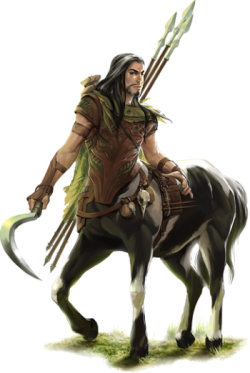
Roamers at heart, centaurs love open spaces and the freedom to travel. As much as they can, centaurs run. They race the wind, hooves thundering and tails streaming behind them.
Centaur Traits
- Health: +4
- Size: 2
- Speed: 6 (Mount)
- Bonus Language: Sylvan
- Gallop: When you run, you quadruple your Speed instead of tripling it.
- Natural Weapons: You can use your hooves as a single natural melee weapon. Attacks with your hooves deal 2d6 damage.
Centaur Novice Path
Suggested Attributes: Strength 13, Agility 10, Intellect 10, Will 10
Natural Defense: 12
Health: 18 (already includes the increase from centaur traits)
Bonus Languages: Common, Sylvan (from the Centaur traits)
Level 1 Dwarf
- Nimble Charger: You can use this talent when you move 4 yards or more. The next attack you make before the end of your turn deals an extra 1d6 damage. Once you use this talent, you lose access to it (luck ends).
Level 2 Centaur
Health: +4
Bonus Damage: +1d6
- Kick and Recover: You can use an action to make an attack and heal half your damage total. You roll to attack with 2 boons. Once you use this talent, you lose access to it until after you rest.
- Fighting Style: You gain one fighting style from the fighter path
Level 5 Centaur
Armored and Natural Defense: +1
Health: +4
Bonus Damage: +1d6
- Trample You can move through spaces occupied by creatures and objects smaller than you. A creature whose space you enter makes an Agility roll. On a failure, the creature takes 2d6 damage and falls prone. An object whose space you enter takes 2d6 damage if you choose. A creature or object can be affected by your use of this talent just once each round
Lore
Nature's Cavalry
Centaurs have humanoid upper bodies, displaying all the human variety of skin tones and features. In size, they are comparable to a human rider mounted on a horse, and they fill similar roles—as cavalry, messengers, outriders, and scouts.
Centaurs’ ears are slightly pointed, but their faces are more wide and square than those of elves. Below the waist, they have the bodies of horses, with coats tending toward brown shades (chestnut or bay) and darker tails.
Close-Knit Families
Centaurs have a strong sense of the interconnectedness of the natural world, and they celebrate family and community as microcosms of that greater connection.
The birth of a foal is always cause for festivities. At the same time, centaurs revere the traditions of the past, preserving old ways and keeping alive the legends of ancestral heroes. They feel a close kinship with wild animals, perhaps because of their own hybrid nature, and delight in the feeling of running alongside herds and packs of beasts.
Don't get on the bad side of a centaur.
As it turns out, both sides are the bad side. The hooves are just as deadly as the spear. Don't even bother trying to run away either. They'll be faster than you, they'll be stronger than you and the one you got on the bad side of won't even be the one who gets you. The rest of their herd. They'll have you surrounded before you know it.
Don't steal from centaurs, take it from me.
—Callie “Three Finger” Slightfoot, Former thief.
Lord Pearse's Short Conversations with Once Interesting People.
Fighters who Revere the Homeland
Centaur fled to Aldrea with the elves, gnomes and other creatures of the fae that fled the faerealm long ago. They, with the elves, are still dedicated on returning to the homeland one day and it is traditional for all centaurs to train to fight as foals.
They prefer to live in areas on aldrea similar to the faerealm and often focus on making those areas more fae. They often get along with the “local” races, but are very territorial about the fae-like areas they have carved out for themselves. They are happy to interact with others, but are very defensive against any perceived threats.
Centaur Names
Centaurs’ given names are passed down through family lines. The name given to a new foal is typically the name of the most recently deceased family member of the same gender, keeping alive the memory—and, the centaurs believe, some shard of the spirit—of the departed.
Centaurs rarely use family names, but wear symbols that represent their family membership. These symbols might include graphical representations of plants or animals, printed mottos, braids and beads worn in the hair and tail, or even specific patterns of woven fabric.
Male Names: Chiron, Kardus, Tinskell, Sarm, Seltari, Burdock
Female Names: Selva, Kori, Helgra, Valtora, Chauri
~~hero-subtitle Evershifting Children of the Fae ~~
Changeling

Changelings are sometimes born in a bloodline that has distant fae lord blood. Sort of a rarer birth defect, Changelings can go years without realizing their true origins or their powers.
Changeling Traits
- Additional Descriptor: Fae
- Size: 1/2
- Speed: 5
- Senses: Keen Vision
- Bonus Language: Sylvan
- Immune: Infection
- Impersonate: If at the start of your turn you lack the confused, controlled, stunned, and unconscious afflictions, you can, without using an action to do so, choose one humanoid flesh-and-blood creature of Size 1/2 or 1 that you can see within 10 yards. You assume the target’s appearance and retain it until you use this trait again, end this effect (at any time), or touch an object made from cold iron. Use of this trait affects your appearance and voice only; you use your normal rules.
Changeling Novice Path
Level 1 Changeling
Suggested Attributes: Strength 9, Agility 12, Intellect 12, Will 10
Natural Defense: 11
Health: 14
Bonus Languages: Common, Sylvan (from the Changeling Trait)
- Deceitful Strike: You can use this talent with the Impersonate trait. Until the end of your turn, when you attack the creature whose appearance you assumed, you roll with 3 boons, and your attack deals an extra 2d6 damage. Once you use this talent, you lose access to it for 1 minute.
- Fluid Transformation: Each time you use Impersonate and you are neither held nor slowed, you can move 1 yard without expending movement. You count as slippery for this movement.
Level 2 Changeling
Health: +4
- Doppelganger's Advantage: When you attack a creature whose appearance you assumed with the Impersonate trait, you roll to attack with 1 boon, and the target takes an extra 1d6 damage from your attacks.
- Restorative Transformation (Magical): When you use your Impersonate trait, you can use this talent to heal half your damage total and increase your Speed by 2 until the start of your next turn. Once you use this talent, you lose access to it until after you rest.
Level 5 Changeling
Health: +4
Bonus Damage: +1d6
- Shocking Transformation When you use your Impersonate trait and its target can see you, the target makes a Will roll. On a failure, the target becomes frightened of you (luck ends).
- Superior Impersonation (Magical): When you use Impersonate, you can make an Intellect roll. On a success, you learn where the target has been and what the target did during the previous hour.
Lore
Shifting Roles
Changelings are gifted with the power to morph and change their body to match other creatures. A changeling who has studied another's face can easily mimic it perfectly. The more a changeling hones their power the more minute details they can change. Height is even changeable within a certain range, sex is also completely malleable to a changeling.
The ability to change every aspect of their bodies can leave many Changelings listless and unaware of how to fit into a regular society. Some stick to one form and pretend they are nothing more than an ordinary elf and some become spies, thieves or charlatans, using their abilities to get what they want with lesser consequences. Some live under one “identity” for years before they decide they wish to move on, change themselves, and move to a new city.
Unknown Origins
Changelings are rare and are often not noticeable at birth. If they are not born with the “Changeling Face,” a changeling will often after birth look different from week to week, the earliest hint that something might be different. Usually this will stabilize a few weeks after birth into what they refer to as their “Birth Face.” Which many Changelings choose to keep.
The “Changeling Face” is often pale-skinned and slender with pupil-less eyes and pointed ears. The skin and hair of this face can vary wildly in color and is considered the “natural” face of Changelings, though it is believed by some to be an oddity caused by in-familiarity with their powers. Until a Changeling has learned to morph into this form, a ceremony known as “The Changing,” they will not have full control of their powers.
“Here's the information you requested sir,“
the well-built dwarf said as he handed the guard captain a sealed letter. “This will end the thieves' guild.”
“Thank you for your assistance as always, Gundren, you have more than earned your reward,” the captain said gratefully as he handed the dwarf a large sack of gold. “I will take my leave, guards, show this man out.”
Gundren walks through the alley and out the other side steps a tall elven woman in a cloak. She walks down a few more alleyways before she enters the sewers to warn her guild about the town guard. A friend of a friend had warned her the hideout had been compromised after all, and they must flee immediately.
— Erwyn Coflin, young adult adventure novelist,
The Opening Line of “The Shifting Trickster.”
Distrusted & Used
Many do not trust Changelings if they are aware of their true nature. When a Changeling discovers their powers, it is not uncommon for their family and friends to abandon them or change the way they act around them. Many want to avoid someone who can change their face and body to “steal” identities at will.
Due to their abilities, Changelings are often used as spies, thieves or other unsavory professions. Many choose this life, but others can be threatened or forced into it. Every kingdom wants multiple Changeling spies and violence, kidnapping, breeding program attempts and other extreme methods have been attempted to keep a cadre of useful Changelings on hand.
A People with No Home
Due to how they are born and their nature, Changelings do not have a homeland. Instead they live within other societies and must either hope for acceptance or hide who they are. Many keep their true race a secret and tend not to share personal information or grow attached to people.
Some Changelings have a “collection” of identities with established backstories, work, friends and families that they flit between as they please.
A Life of Change
Changelings are rare, but many become adventurers, a nomadic life allowing them to be who they need to be for each location they visit. The ability to change to a new identity to escape detection can motivate many to become Rogues or Bards. Others may simply want to live openly as they are and the adventurer's lifestyle opens that door for them, making them one of those adventurers instead of that shapeshifter.
Changeling Names
Changelings are named by their birth parents, but many take on monosyllabic names upon reaching The Changing. Depending on how long they lived among other races and which race they grew up with, Changelings may or may not give gender distinction to themselves or their names.
Names: Bin, Dox, Fie, Hars, Jin, Lam, Nit, Ot, Paik, Ruz, Sim, Toox, Yog
~~hero-subtitle Built for a Purpose ~~
Clockwork
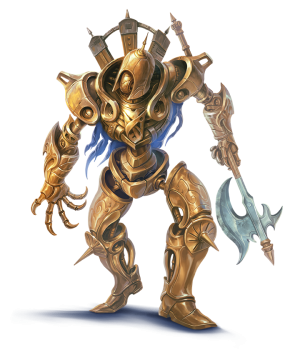
Clockwork Traits
- Size: 1
- Speed: 4
- Natural Defense: +3
- Health: +8
- Immune: asleep, poisoned, deprivation, exposure, infection, suffocation
- Mechanical Being: When you become injured, you become slowed until you are no longer injured. To heal damage or regain Health from resting, you must expend a set of spare parts. When you become incapacitated, you count as a magical object and lose no Health at the end of each round. You remain an object until destroyed by harm, at which point your soul departs the body and prevents you from being restored to life by any means short of divine intervention. However, a creature can use an action to stabilize you by turning your key; you heal damage and become a creature again at the end of the round rather than healing damage immediately.
- Grind the Gears: At the start of your turn, if you lack the confused, controlled, stunned, and unconscious afflictions, this trait increases the number of actions you can use on your turn by one. At the end of the round, make a luck roll. On a failure, you become stunned (luck ends). A creature that can reach you can use an action to remove this affliction early by winding your key. Once you use this trait, you lose access to it for 1 minute.
Form Defines Function
Your purpose determines your physical characteristics as well as the training you received. Choose one of the options below in place of your profession at character creation.
Artisan: You made pipes, hoses, frames, weapons, and components. You repaired damage and constructed new buildings whenever needed. As an artisan, you stand 6 feet tall, weigh 200 pounds, and have a smooth, featureless steel carapace over your inner mechanisms. You have a tool kit.
Research Assistant: You aided in magical research and experiments. You stand 5 feet tall and weigh 175 pounds. The human features of your carapace resemble that of an elderly human and are more expressive. You know Arcane in addition to your other languages.
Entertainer: You were created to entertain others and alleviate the blackest of moods. You stand 4 feet tall, weigh 150 pounds, and you have a brightly colored carapace that gives you fully expressive human or animal features. You have a musical instrument.
Laborer: You were made to repair and maintain, performing menial tasks. You patched walls and replaced roofs, but you also aided in construction. You stand 7 feet tall, weigh 250 pounds, and have a dull iron carapace with no distinguishing facial features. You have a hammer.
Servant: You were created to serve. Keeping a home clean, animals fed, and areas beautiful. You stand 4 feet tall, weigh pounds, and have a shiny copper carapace with a suggestion of human facial features. You have three sets of spare parts.
Soldier You were created to defend and destroy. You stand 7 feet tall, weigh pounds, and have a steel carapace. Your humanoid body has the head of a beast such as a bull, stag, lion, or wolf. You have some range of facial expression and carry a spear and shield.
Clockwork Novice Path
Level 1 Clockwork
Suggested Attributes: Strength 12, Agility 9, Intellect 10, Will 12
Natural Defense: 13 (includes increases from your ancestry traits)
Health: 22 (includes increases from your ancestry traits)
- Clockwork Form Upgrade: Choose one of the following benefits:
- Increase your Size by 1 and your Health by 5
- Clockwork Fit Upgrade: Choose one of the following benefits:
- You ignore the requirements for wearing armor and using weapons. You roll to attack with 1 boon.
- Gain a second profession of your choice from the Form Defines Function list above, and add an additional language to the list of those you know.
- You make rolls in social situations with 1 boon.
- Clockwork Function Upgrade: Choose one of the following benefits:
- When you get a success on a roll to attack, you can choose to treat the success as a critical success. You can use this talent once. At level 5, you can use it twice. You regain the uses of this talent after you rest.
- You discover two traditions and one novice spell.
- When you get a critical success on a roll, you regain the use of your Grind the Gears trait.
Level 2 Clockwork
Health: +8
Speed: +1
- Custom Gearbox: You can us e this talent with your Grind the Gears trait. Choose an attribute and until the end of the round, you make rolls with that attribute with 1 boon.
- Self-Repair: If you have a set of spare parts, you can use an action to expend it, healing damage equal to half your damage total. You can use this talent once. At level 5, you can use it twice. At level 7, you can use it three times. You regain your uses of this talent after you rest.
Level 5 Clockwork
Health: +8
Bonus Damage: +1d6
- *Advanced Clockwork Upgrade** Choose two of the following abilities:
- Gain the Da discover two traditions, learn two novice spells, or learn one expert spell.
- Gain a fighting style of your choice from the options available to fighters
- Gain the Climber or Fly trait. You lose the Fly trait while injured.
~~hero-subtitle Bonded with something that came before ~~
Daeva
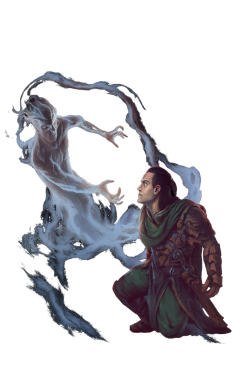
What kind of life might you have had if not for that stone? Maybe you would have fallen in love, started a family, lived a life—simple but good. But that life ended the moment you took up that stone you found, gleaming in the rubble. On pulling it free, you heard a voice in your mind that told you tales of another time and place. The voice offered you a chance at a different kind of life, one that could lead to greatness, knowledge, wisdom, and, above all, adventure. The entity, a spirit held in the crystal, offered you everything—but only if you would become its host. Did you have doubts? Did you think twice? You can no longer remember. It no longer matters. You made the choice, and you must live with it. Everything you now do, you do to protect the being living within you. The two of you have grown so close, it is hard to tell where you end and the symbiote begins.
You were born human and remain so for the most part. You have human characteristics, traits, and needs. The symbiote chose you not for your looks, but for your character, so you can have any appearance. When you bonded with the symbiote, the crystal containing its essence crumbled away, leaving just one or a few small shards embedded in the center of your forehead.
Daeva Traits
- Additional Descriptor: Spirit
- Size: 1
- Speed: 5
- Bonus Languages: Lemurian
- Symbiotic Aid: You can use this trait in combat when you make an attribute roll; add 10 to the result. Once you use this trait, you lose access to it for 1 minute.
- Divine Doom: You make luck rolls with 1 bane.
- Luminous Symbiote: You can use an action to release a luminous symbiote into one Size 1 empty space within reach. The symbiote remains apart from you until it returns to your body or becomes incapacitated, which ends the separation regardless of your distance apart. While separated, you are weakened but lose access to the Divine Doom trait. The symbiote uses the rules below. It takes its turns when you do, and you decide what it does on its turns. If you become incapacitated while separated, the symbiote becomes weakened. If you die, the symbiote dissipates and is lost forever. In addition, your own soul is destroyed; effects that would restore you to life fail. Once you use this trait, you lose access to it for 1 minute after its effects end.
Symbiote Spirit
Defense: 20
Health: 10 plus twice your level
| Strength | Agility | Intellect | Will |
|---|---|---|---|
| 10 (+0) | 16 (+6) | 16 (+6) | 16 (+6) |
Size: 1
Speed: 6 (Fly, Hover, Insubstantial, Slippery)
Languages: Understands all languages you know
Traits
Immune: asleep, blinded, controlled, deafened, frightened, held, on fire, poisoned, prone, slowed; exposure, deprivation, infection, suffocation
Radiant: The symbiote emits bright light.
Divine Doom: The symbiote makes luck rolls with 1 bane.
Actions
Radiant Touch: The symbiote targets one flesh‑and‑blood creature within reach, then makes an Agility (+6) roll with 1 boon against the target’s Agility. On a success, the target takes 1d6 damage.
Reactions
Dazzling Light: When harmed, the symbiote can release a flash of blinding light. Each sighted creature within 3 yards makes a luck roll. On a failure, the creature becomes blinded until the end of its next turn. The symbiote then loses access to this trait for 1 minute.
Daeva Novice Path
Level 1 Daeva
Suggested Attributes: Strength 11, Agility 11, Intellect 10, Will 11
Natural Defense: 9
Health: 10
Bonus Languages: Common, Lemurian (from the ancestry Trait)
Traditions: Two
- Ancient Wisdom: You can use this talent when you make an Intellect or Will roll. Roll with 1 boon. Once you use this talent, you lose access to it for 1 minute.
- Durable Symbiote: Increase your symbiote’s Health score by 10.
Level 2 Daeva
Health: +2
Bonus Damage: +1d6
Spells: Two novice
- Instinctive Release: You can use a reaction when you are harmed to use your Luminous Symbiote trait.
- Shining Recovery (Magical): If you are not under the effects of your Luminous Symbiote trait, you can use an action to heal half your damage total and emit bright light for 1 minute. You also regain all the expended castings of the novice spells of your Daeva tradition. Once you use this talent, you lose access to it until after you rest.
Level 5 Daeva
Health: +2
Spells: One expert
- Dread Symbiote: Increase your symbiote’s Health score by another 20. In addition, its Radiant Touch now deals 3d6 damage.
Lore
Dual Existence
You share your body with an ancient spirit you liberated from a crystal shard. The spirit belonged to a person who lived in fabled Lemuria, an ancient kingdom whose rise to greatness offended the gods. Since you’ve bonded, the spirit’s consciousness lurks in your mind: sometimes a dim presence, other times emergent and able to converse with you. If you allow it, the symbiote can take over your body and speak with your voice. But it prefers not to expose itself in this way and instead shares its thoughts to counsel you when you need help.
Although your body anchors the spirit to the mortal world, it can emerge from you for short periods to help in battle and perform certain tasks. When you choose, light pours out of the crystal on your forehead and in the radiance a luminous humanoid form takes shape.
Ancient Tragedy
From the symbiote, you learned the gods sank the island nation of Lemuria and drowned its people in response to their attempt to become immortal and take divine power for themselves. They anticipated an attack and prepared by migrating the souls of many of their folk into crystal shards, where they could wait until the time to rebuild. The Lemurians had planned for survivors to prepare new bodies to hold the shard‑bound spirits. No one survived, however. A million crystals were washed away, scattered across the world.
The crystals protected the spirits, but time has chewed away at their memories until just the personality and will to exist remain, alongside a fading vision of the home they lost. On bonding with a mortal host, the spirit regains something of who they were, bit by bit, reflected in the talents their host develops along the way. The daeva’s identity could fully return one day, in which case the host must decide whether to surrender to the symbiote or break with it. Or perhaps the symbiote must decide whether to surrender to the host or break with it.
Rare Crystals
A market for Lemurian crystals exists. Each crystal holds magical energy useful for powering large devices such as portal gates, magitech, and certain weapons. Draining the crystals of their energy kills the spirit inside. Though thousands of crystals have been exhausted this way, many more remain, hidden or lost.
So few people ever happen on a crystal that those who do never find another unless they hunt for them. As a result, daevas can go their entire lives without ever encountering another like them. Most daevas remain with their former people, though some are forced out of the community if others are unsettled by their nature as aspects of the Lemurian bleed into their personality and memories.
Symbiote Objective
Your symbiote has a goal. It can relate to something that happened before its soul vanished into the crystal or an overarching pursuit that might influence your decisions. Use the following table to generate a random objective.
| D6 | Goal Description |
|---|---|
| 1 | Find shards and help the spirits within find hosts. |
| 2 | Weaken or defeat agents of the gods. |
| 3 | Locate a particular spirit contained in a shard. |
| 4 | Learn all about the world and how it has changed since ancient times. |
| 5 | Discover a way to free itself from your body to inhabit a new one—perhaps a soulless mechanical form or one grown using magic. |
| 6 | Locate Lemurian artifacts scattered across the known world. |
Daeva Names
You can keep your name, but you also answer to the daeva’s name, which often sound odd to modern ears: Apollonia, Adar, Anai-Sa, Bitaak, Boread, Casiel, Ezepherel, Gilgamar, Kafziel, Llerial, Mykkena, Tintena, and Tthachkakii.
~~hero-subtitle Lesser Scions of Vampires ~~
Dhampir
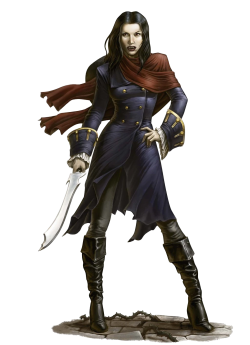 You carry something of the vampire’s curse, gained from an encounter with the undead or inherited from an ancestor. And though you live and breathe as any other human, you bear the burden of thirsting for fresh blood. Lest you descend into monstrous savagery, you must find some way to control your appetite.
Dhampir Traits
- Size: 1
- Speed: 6
- Senses: keen_scent
- Immune: poisoned
- Natural Weapons: You can use your teeth as a Nimble natural melee weapon to deal 1d6 damage.
- Drink Blood: You can use this trait when you attack with your teeth against a flesh-and blood target that is held, stunned, or unconscious or when you get a critical success against any flesh-and-blood target. The tar get loses 1d6 Health. Then, for 1 minute, your Speed increases by 2 and you make attribute rolls with 1 boon.
- Sunlight Weakness: If you start your turn in a space lit by direct sunlight, you become weakened until the start of your next turn.
Dhampir Novice Path
Level 1 Dhampir
Suggested Attributes: Strength 11, Agility 11, Intellect 10, Will 11
Natural Defense: 11
Health: 14
Bonus Languages: Common and one other language
- Bloodthirsty Recovery: When you use Drink Blood, you also heal half your damage total, and the target becomes weakened (luck ends). Once you use this talent, you lose access to it until after you rest.
- Swarm of Bats: You can use this talent when you dodge. You, along with everything you wear and carry, turn into a cloud of bats and fly to an empty space within 5 yards. For this movement, you have the Insubstantial and Slippery traits. When you reach your destination, you return to your normal form. Once you use this talent, you lose access to it for 1 minute.
Level 2 Dhampir
Health: +4
Bonus Damage: +1d6
- Fearsome Visage: You can use this talent when you attack. Your face becomes monstrous until the end of your next turn. You impose 1 bane on rolls to attack you by creatures not immune to the frightened affliction. Once this talent is used, you lose access to it (luck ends).
- Feral Dhampir (Magical): You gain the dark_vision and climber traits. In addition, your natural weapons have the brutal trait.
Level 5 Dhampir
Health: +4
Bonus Damage: +1d6
- Enchanting Gaze (Magical): You can use this talent at the start of your turn without using an action provided you lack the confused, stunned, and unconscious afflictions. Target one creature within 5 yards and make a Will roll against its Will. On a success, you pull the target up to 5 yards and gain 1 boon on rolls you make against it until the start of your next turn. On a failure, the target becomes immune to this talent for 24 hours.
- Throat Rip: When you get a success on a roll to grab a flesh-and-blood target, you can use a reaction to make a Natural Weapons attack against the same target.
Lore
Part-human, Part-vampire
You look human: pale and thin, maybe sickly. You have gleaming red eyes, but no other physical qualities that would set you apart from those on whom you sometimes feed. Your normal appearance conceals the corruption you gained from the vampire who fed on you or inherited from one of your ancestors. You must eat food, drink water, and sleep—but you also can nourish yourself on a diet of blood. When you enjoy periods of high blood consumption you appear healthier, even youthful, compared to when you go a long stretch without.
Vampiric Scions
Normally vampires create other vampires by draining their victims to the brink of death, then feeding them vampiric blood. The feeding kills the victim and causes them to rise as a new vampire. Sometimes, though, a vampire feeds without killing, leaving the prey weak but able to recover. Sometimes when this occurs, the vampire’s corrupted essence passes through the “kiss, ” it transforms the mortal into a dhampir. These unfortunates gain a thirst for blood and some vampiric traits but remain as alive as before the encounter; they pass the curse onto their offspring.
Touched by Darkness
Dhampirs have the same physiology as humans, except they can ingest and digest blood without growing ill. The blood they drink vitalizes them for superhuman feats. Aside from their cravings for fresh blood—and the ability to draw sustenance from it—dhampirs also acquire certain physical quirks. Hair can grow from the palms of their hands, or their eyes might shine in the darkness. They might reflect faintly in mirrors or cast no shadows at all. Dhampirs who surrender to their thirst develop more and more of these qualities, with the cumulative effect of stripping away their humanity.
Fear and Loathing
As few people distinguish between dhampirs and vampires, such misidentification causes endless trouble for dhampirs. Well-intentioned undead slayers hunt them, and mobs of torch- and pitchfork-wielding commoners form to drive out suspected blood drinkers. Even if dhampirs mind their own business, sequestered in some isolated place, they’re bound to run afoul of adventurers who think they do good by kicking down doors and attacking with wooden stakes. For these reasons, dhampirs eager for long lives do well to stay out of view, keep their true natures hidden, and make sure to feed without any witnesses.
Loathsome Sun
Speed, a keen sense of smell, an incredible constitution that enables you to ignore any toxin—these traits come at a cost. Sunlight hurts. You don’t burn in the manner of some undead, but you feel weak, dizzy, and sick. No matter how much you cover up, the sunlight finds a way to get to you, so you prefer to do your business at night.
Dhampir Names
Your name is typical to the society you grew up within.
~~hero-subtitle Hardy and Skilled Craftspeople From the Underground~~
Dwarf
 Bold and hardy, dwarves are known as skilled warriors, miners, and stone and metal workers. Dwarves are squat, muscular humanoid creatures standing below 5 feet tall with oily skin and hair that tends to be more solid than human hair. Their skin is tough — though not as tough as an orc’s skin — and all dwarves have beards, regardless of sex.
Dwarven Traits
- Health: +4
- Size: 1/2
- Speed: 5
- Bonus Language: Dwarvish
- Dark Vision: You can see out to a range of 4 yards when in no light at all.
- Hard Target: You impose 1 bane on rolls to attack you by creatures that are larger than you.
- Low Center of Gravity: When an ordinary effect would move you against your will, you can make a Strength roll. On a success, you ignore the movement effect. In addition, you count as Size 1 for the purpose of making unarmed attacks and for unarmed attacks made against you.
- Superior Constitution: When you become poisoned, make a luck roll. On a success, the affliction ends.
- Short Legs: When you run, you merely double your Speed score instead of the normal benefits for this action.
Dwarf Novice Path
Suggested Attributes: Strength 12, Agility 9, Intellect 10, Will 12
Natural Defense: 10
Health: 18 (already includes the increase from dwarf traits)
Bonus Languages: Common, Dwarvish (from the dwarf traits)
Level 1 Dwarf
- Aggressive Advance: When you deal damage with a melee weapon, you become slippery until the start of your next turn. Once you use this talent, you lose access to it (luck ends).
- Dwarf Weapon Training: You ignore the requirements for wearing armor and using weapons. When you attack with a bludgeoning or brutal weapon, you roll with 1 boon. Finally, when you get a critical success with such a weapon, the attack deals extra equal to your Strength modifier (minimum 1).
Level 2 Dwarf
Health: +4
Bonus Damage: +1d6
- Indomitable Recovery: You can use an action to make an attack and heal half your damage total. You roll to attack with 2 boons. Once you use this talent, you lose access to it until after you rest.
- Make It Count: When you get a failure on a roll to attack, you can use this talent to add your level to the result of the roll; if doing so would turn the failure into a success, you get a success instead. Once you use this talent, you lose access to it for 1 minute
Level 5 Dwarf
Armored and Natural Defense: +1
Health: +4
Bonus Damage: +1d6
- Make It Count More: When you make any roll to attack, you can use this talent to add your level to the result of the roll—even a success—to increase the likelihood of a critical success. Once you use this talent, you lose access to it for 1 minute. (This talent replaces Make It Count.)
- Obstinate Strike: When you get a success on a roll to attack, you can use this talent to deal an extra 2d6 damage. For 1 minute, you make attribute rolls to resist harmful effects with 1 boon. Once you use this talent, you lose access to it for 1 minute.
- Stubborn Resolve: When you get a failure on a Will roll, you can use this talent to discard the failure and roll again. You must use the second result. Once you use this talent, you lose access to it for 1 minute
Lore
Insular Tradesmen
While dwarf society is fairly insular, their societies are often heavily based on trade with the outside world. All their cities and communities are underground, but many dwarves go to the surface to trade and sell the riches found mining to other species. While they are not necessarily dependent on “surface things,” trade is a large part of dwarven culture.
The fact that most dwarves that go to the surface are merchants can cause other species to stereotype dwarves as obsessed with gold, silver and jewels. The trade and working of metal, stone and jewels is very important in dwarven culture and their artwork and craftsmanship is renown around the world.
Clans and Faith
Dwarven Kingdoms are built around clans of powerful families. Dwarven clans are very honor-based and value their ancestors. Dwarves greatly value their clan name, home, traditions and any heirlooms their family passes down. Dwarven families are very closeknit and the worst thing that can happen to a dwarf is to become clanless, disowned from their own family.
“The time has come for you to bear the dokenshield,” Moki Dokenshield heard his father say weakly as he grasped his hand. Moki’s father, Loki, the great hero was dying and it was Moki’s turn to bear his family’s namesake and protect their clan. Moki felt a hand on his shoulder, as he looked up he saw the eyes of the king, Addleburn Silversong.
“Goodbye old friend,” the king whispers. “I’ll have to write one more song about you once you’ve made yourself a home beyond. You will be among the greatest of our ancestors.”
The old dwarf smiled and Moki felt his father’s hand go limp in his own. The king took the large shield off of his dead friend and handed it to Moki. As Moki took it, he felt the weapon reshape itself, becoming a size more suited for his smaller frame and he heard his father’s voice again. “As long as you bear this shield, I will be with you, my son. We all will.”
—Addleburn Silversong,
The Tale of Loki Dokenshield, last verse.
Traditions
Dwarven gods are greatly heroic dwarves from the past whose deeds and skills deified them after their death. The dwarven pantheon is made almost entirely out of dwarves who existed in history. The stories around those dwarves may have been exaggerated, but they are based on real figures. The religion is thus varied based on clan and caste, with families often deifying heroes of their clan. Even in the afterlife, many traditionalist dwarves believe that heroes of a higher caste are more powerful than those of lower castes.
The central figure of dwarven religion is Hephaestus, their creator god, and god of forging, heat, and metal. It is said he still lives in the deepest parts of the planet, where he remains because he was blinded by the Dwarven evil god of light and cold. It is said the highest priests of Hephaestus blind themselves in reverence, and in Dwarven culture a baby being born blind is seen as a good omen, and believe the child will be particularly spiritual.
Dwarves also have a reverence for metal and forged items. Architecture and blacksmithing are the two greatest arts in dwarven culture, and it is considered sacrilegious for dwarves of certain castes to wear certain metals. Mithril is considered the most sacred and rare, a metal made for kings or great heroes.
A People Once Divided
Dwarves used to look down on their brethren that live closer to the surface than them, viewing them as lesser dwarves. Today, this is a minor issue with the hill and mountain dwarves, due to both having grown to have a greater connection with the surface over the millenia, but some areas still have discrimination among dwarves based on how deep in the earth they live.
Historically, dwarves in Aldrea have lived in a strict caste-system based on how deep within the earth they reside, with those who went on the surface treated as slaves. Hill dwarves were the lowest caste and mountain dwarves above them, the Deep Dwarves above them and the mysterious Khokavet reigning over all of dwarfkind.
This system ended long ago, but the two subraces of lower dwarves, the Deep Dwarves (also known as Duergar) and Kokhavet still take this caste system very seriously, viewing the upper dwarves as poor examples of dwarves and mere tools. Some areas of the world still have this system in place, but today the divide is mostly between the Hill & Mountain Dwarves and the Duergar & Khokavet.
The Deep Ones
Deep within the planet, lower than most species can survive, dwell the Kokhavet. Appearing very inhuman, more like moles than another humanoid race or even dwarves, the Kokhavet live for millenia. Longterm planners, even now that they do not have direct rule of Dwarven society, the Kokhavet subtly work to control and shape Dwarven society over generations.
They only ever meet with elite members of the Deep Dwarves and are rarely seen outside of these planned meetings, causing most on the planet, including most dwarves, to believe they are a myth. This suits the Kokhavet and their machinations just fine, for now.
The Deep Dwarves live within the Underdark and serve the Kokhavet. Their culture is very divided from their brethren closer to the surface. Like much of the Underdark, slavery is common and due to the harsh conditions of the Underdark, Deep Dwarf society is much crueler than Hill and Mountain Dwarves. The clan is still the focus, but it is much easier for a dwarf to become clannless as being seen as weak is an expellable offense.
Duergar are typically more practical than other dwarves, mostly by necessity. Deep Dwarves don’t spend years making aesthetically beautiful architecture, instead focusing on making what is most efficient and effective. Deep Dwarves are often at their happiest when keeping the mind and body focused on a singular task and pride themselves on their excellent utilitarian craftmanship. They are rarely seen on the surface outside of clanless exiles. Check with your Dungeon Master to see if you can play a Deep Dwarf.
For the Glory of the Clan
Dwarf adventurers are often motivated by bringing greater glory and power to their clan, whether by bringing in treasure, performing great deeds in their clan’s name, or by bringing glory to a diety. Some are on a quest of restoration, trying to reclaim a clan’s lost honor or their own after being exiled. Others are on altruistic quests to help others or on a personal quest to avenge a lost comrade or to retrieve a lost artifact.
Dwarf Names
Dwarf names are often based heavily around their clan name. Dwarves often reuse names from their ancestors, but will avoid doing so if a dwarf ascends to godhood, preferring to create offshoots of that name at that point. For instance, after Baldren Tarrasquerider ascended to his place as god of adventuring, Baldrenne and Baldrynne became common names.
Male Names: Addlebaern, Adren, Baldrenne, Baldrock, Braenor, Dracknaw, Darrak, Elberk, Faldren, Flint, Garrain, Haldrek, Kildrack, Mordam, Rangren, Taldek, Thoran.
Female Names: Amber, Arry, Baldrynne, Baldrynne, Dagnal, Diessy, Eldyth, Falkrynne, Gunnydola,Helja, Hilda, Kristrye, Ilde, Liftrasa, Mardres, Riswynna, Sannla, Vestria.
Clan Names: Battlehammer, Ironforge, Bronzepick, Strikeheim, Truehelm, Holdbringer, Truestrike, Firebringer, Diamondbreaker.
~~hero-subtitle Residents of the faerealm ~~
Elf
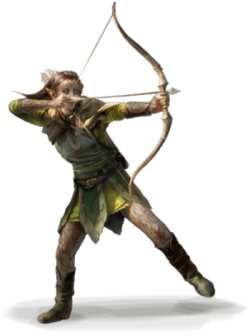
Driven from their home in the Faerealm by the Winter Fae, the Summer Fae were forced to make a home in a new world. As they adapted to their new world, many continued to focus on their original home, gathering forces to forcibly take it back and return home once again.
Elf Traits
- Size: 1
- Speed: 6
- Bonus Languages: Sylvan
- Senses: keen_hearing, keen_vision
- Immune: infection
- Protection from Magic: You impose 1 bane on rolls against you from magical effects. You roll to resist or end magical effects with 1 boon.
- Unearthly Grace: You can use this trait when you make an Agility or Intellect roll. Add 5 to the result. Once you use this trait, you lose access to it for 1 minute.
- Iron Abhorrence: Whenever you take damage from a weapon made of iron or an alloy of iron, you become weakened until the end of your next turn.
Elf Novice Path
Level 1 Elf
Suggested Attributes: Strength 9, Agility 14, Intellect 11, Will 9
Natural Defense: 13
Health: 12
Bonus Languages: Common, Sylvan (from ancestry trait), and one other language
Traditions: One
Spells: Two novice
- Benefit of Experience: When you use your Unearthly Grace trait, you can use this talent to add 10 to your roll instead of. You can use this talent a number of times equal to half your level (minimum 1). You regain expended uses after you rest.
- Elven Weapon Training: You ignore the requirements for using the bow, longbow, and shortbow. You treat the sword as Nimble. When you attack with a bow, dagger, longbow, shortbow, or sword, you roll with 1 boon.
Level 2 Elf
Health: +2
Traditions: One
Spells: One novice
- Fey Recovery: You can use an action to heal half your damage total and teleport to an empty space you can see within yards. Once you use this talent, you lose access to it until after you rest.
Level 5 Elf
Health: +2
Bonus Damage: +1d6
Spells: One expert
- Ethereal Being: You impose 1 bane on rolls to attack you and rolls made against you. You make all rolls to resist and end harmful effects with 1 boon. Finally, when you gain an affliction, you can make a luck roll. On a success, the affliction ends. On a failure, you lose access to this talent until the end of your next turn.
Lore
Slender and Graceful
Elves are slightly taller and thinner than humans, and feature long pointed ears and noses. With silken hair, elves are often though of as beautiful by humans and other races.
Elves’ bones are less dense than many other species, keeping them light on their feet and giving them a different gait. Their skin and hair can vary greatly depending on their subspecies. As a whole, facial hair is rare and they have almost no body hair. They commonly dress in elegant colors.
A Perspective of Ages
Being as long lived as they are, Elven culture seems incredibly stagnant to other races. They tend to think in the long-term and focus on higher thinking than current politics. All major decisions are made slowly and carefully, considering all possible angles and outcomes.
Due to this longterm view, elves can sometimes have trouble relating to the younger-lived races and can come across as uncaring or haughty for not working on more mortal timetables or believing that their long lives make them more competent and trustworthy.
“This isn't good enough, this will never be good enough!”
that is what I had yelled at him before I struck him. I told him he was lucky royalty didn’t hear him say such things. I watched him run out of my quarters. I saw the blood on my hands. I had gone too far. I’m not sure if I will see him again.
I partnered too young. These younger elves didn’t know what the homelands were like — no, are like. The thought of my children, and my children’s children never knowing the homeland frightens me. Is this how it will be? As the generations went on, would our people not know what we missed? I am getting old. I was but a child of 50 when we were driven from the homelands. Now I am merely 1400, yet I am feeling the effects of age. It must be this new world. How long will my children live?
Other Fae, Queen Titania, the Ladies, the Lords, the Princes, the Princesses, they surely will live forever, even here they cannot die, but we elves are a young race. Other young fae are already drifting away from the cause. I haven’t seen gnomes in the war camps as frequently in the last few centuries. Will the others fall away as well? Will our descendants fail to keep focus on the return home? I must speak to Caelynn tomorrow, we must gather all we can of what we retrieved from the homelands, we must write more songs of what was lost. We must make sure our children know what they are fighting for.
—Unknown Elf, 1350 PL,,
Journal Fragment, discovered by Rolan Miliamne.
Driven From Their Home
Elven culture centers heavily around the fact that their ancesters, the first Elves, were Summer Fae driven from the Faerealm by the Winter Fae. Elves believe the most important thing is to become worthy of entering the Faerealm once more so they can defeat the Winter Fae and take back their homelands. The subraces of elves came about over philosophical differences of how to accomplish this and they physically and philosophically changed from what they originally were.
Elves feel that the Earth and its creatures are inherently inferior to Fae and the Faewilds of the Faerealm. Though some elves have come to appreciate Aldrea and its natural features and creatures, most still feel that things could be better and the mortals here are misusing their world.
Hidden Societies
Elves live in villages, whose locations vary by subrace. Often they live in forests or other places away from the larger settlements and cities of the young races. They have familial ties, but overall Fae vs. Non-Fae is their primary concern. Surnames are passed matrilinerally, though this is more important to some subraces than others.
Villages tend to stay hidden from outsiders, and elves tend to be incredibly private, especially to non-fae. An elf would allow a gnome or a satyr to come visit and discuss the news of the day, but would be much less welcome to a human, an orc or a dwarf. They are often offended by non-Fae who try to live in Elf communities or learn Elven languages.
For the Homelands or Glory
Elves can go adventuring for a variety of reasons, but a common reason is to help with the fight for their homelands. Whether it’s looking for a new portal to the Faerealm, finding any artifacts from their first arrival that may help them in their fight, or to collect ancient magics that can counter the Winter, many elves are driven by a love for their homeland.
Others may feel more at home on Aldrea and have issues fitting into elven society or simply have wanderlust.
Elven Names
When an elf is born, it is known by a name their father chooses and the surname of their mother. The community at large will typically refer to the child by their surname.
Upon reaching their hundredth birthday, an elf chooses a new name for themself. Their childhood name is then used only by those closest to the elf.
Using this original name is a sign of intimacy.
Father Names: Ara, Bryn, Del, Eryn, Faen, Innil, Lael, Mella, Naill, Naeris, Phann, Rael, Rinn, Sai, Syllin, Thia, Vall.
Female Names: Adrie, Althaea, Anastrianna, Andraste, Antinua, Bethryana, Birel, CAelynn, Drusilia, Enna, Felosial, Ielenia, Jelenneth, Keyleth, Leshanna, LIa, Meriele, Mialee, Naivara, Quelenna, Quilathe, Sariel, Shanairra, Shava, Silaqui, Theirasta, Thia, Vadania, Valanthe, Xanaphia
Male Names: Adran, Aelar, Aramil, Arannis, Aust, Beiro, Berrian, Carric, Enialis, Erdan, Erevan, Galinndan, Hardarai, Heian, Himo, Immeral, Ivellos, Laucian, Mindartis, Paclias, Peren, Quarion, Riardon, Rolen, Soveliss, Thamior, Tharivel, Theren, Varis
Family Names (Common Translations): Amakiir (Gemflower), Amastacia (Starflower), Galamodel (Moonwhisper), Holimion (Diamonddew), Ilphelkiir (Gemblossom), Liadon (Silverfrond), Meliarnne (Oakenheel), Nailo (Nightbreeze), Siannodel (Moonbrook), Xiloscient (Goldpetal)
Subgroups of Elves
Dark Elf (Drowriel)
Like other elf cultures, The Drowriel are defined by their relationship to their new home. The Drow believe that they are permanently stuck on earth and there is no way to return to the Faerealm. Because of this, they believed that conquering Aldrea as a new home for the fae was the best course of action.
Banished to the Underdark after a violent war, the Drow have diverged greatly from surface elf society. Rigid traditions, harsh matriarchy and violent conflicts shape Drow society. Family is very important to the Drow, with dynastic families ruling their underdark cities. Crossing a Drow can often mean crossing their entire family.
Drow are also well-known for raising giant spiders that they use for their venom and magically-infused silk they weave into armors and artwork.
Drowriel adventurers are rare on the surface, but some societies do exist, hidden in the harsh environments they were banished to after the war. There are rumors of more open societies on far corners of the world that they surfaced to from hidden underdark tunnels.
Eladrin
Eladrin are elves that live within the faerealm. Some say they are the only true elves, while others say that they have been changed by winter's takeover, just as other elves have been changed by their exit of the faerealm.
A lively people, eladrin societies are bustling and full of fae creatures of various kinds as well as non-fae creatures, such as those stolen from their cribs and replaced with changelings, wanderers, merchants and adventurers.
They are rare in Aldrea, though some have immigrated, complaining of the increasingly unbalanced nature within The Faerealm as it grows colder and colder.
High Elves (Anjariel)
Like other elf cultures, The Anjariel are defined by their relationship to their new home. The High Elves believe that they must return to The Faerealm by any means necessary and that their time on Aldrea is temporary and a punishment.
High Elves are more likely to be obsessed with returning to the Faerealm, and thus can be more likely to consider themselves the “purest” form of elf. Most High Elves try as hard as possible to avoid associating themselves with Aldrea and don’t want to get too involved with the “lesser” races, believing this counter to the penance required to return to their homeland.
In general, High Elves are the most likely take ancient fae literature very seriously and some groups consider themselves so superior to other races that they believe they should rule this plane before they return. Though few would profess this belief publicly. Most High Elf societies are somewhat detatched from the going-ons of Aldrea that are not related to the battle for their Homeland. Instead focusing on training and bettering themselves in order to better return to the Faerealm.
Winged Elves (Avariel)
Like other elf cultures, The Avariel are defined by their relationship to their former home. Like the drow, Avariel believe that it is impossible to return to the Faerealm. However, unlike the drow, they did not want to put another world through the pain they felt when their home was taken from them. As such, they wanted to leave Aldrea to its existing inhabitants and worked to become as uninvolved with non-elves as possible, making them almost mythological creatures.
After experimenting with magic, the winged elves grew the wings that give them their name and created floating cities in the sky, hidden from most.
Due to their extreme rarity and lack of interaction with the world, check with your DM and work carefully before creating a character from the Avariel culture.
Wood Elves (Fardariel)
Wood Elves have fully embraced the earth and consider returning to the Faerealm a lost cause. They believe it is best to make due with Aldrea and work to improve it by making it resemble the Faewilds. Because of this, they view the planet and nature as consecrated, working to preserve nature around them. Living high in the trees, Wood Elves build homes of living branches as to not harm the forest.
Wood elves don’t eat meat, except of those who have harmed nature.
Other important cultural values for wood elves are curiosity and exploration. Isolated though wood elf villages may be, it is not uncommon to see a wood elf troubadour, craftmaker, or sightseer on a quest to learn something new.
~~hero-subtitle Touched by a fairy. ~~
Faekin
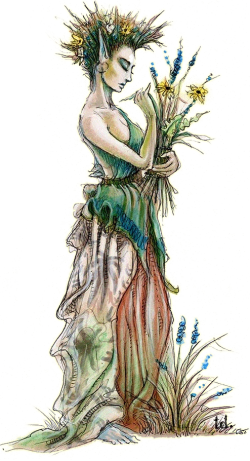
Most faekin are half-elven, half-human, but satyrs, dryads, and other humanoid (and not so humanoid) fae creatures are capable of having children with humans as well.
Human Traits
- Size: 1
- Speed: 5
- Bonus Language: Sylvan
- Faekin Variety: Choose two of the following traits to represent your fae ancestry.
- Faerie Mischief (Magical): When a creature you can see within 10 yards of you must make a luck roll, you can use a reaction before the dice are rolled to impose 1 bane on the roll.
- Faerie Step (Magical): When you move, you can expend 1 yard of your movement to teleport to an empty space within 5 yards that you can see. Once you use this trait, you lose access to it for 1 minute.
- Fae Senses: You gain the Keen Hearing and Keen Vision traits.
- Fleet-Footed: Increase your Speed by 1. When you run, you can use this trait to quadruple your Speed score until the start of your next turn. You then lose access to this entire trait for 1 minute.
- Uncanny Grace: When you’re about to make an Agility roll, you can use this trait before you roll the dice to grant yourself 1 boon on the roll. Once you use this trait, you lose access to it for 1 minute.
- Wholesome Body: You are immune to infection. In addition, whenever you heal damage, you can use this trait to heal extra damage equal to twice your level. Once you use this aspect of the trait, you lose access to it for 1 hour.
~~hero-subtitle Cast out from the heavens~~
Fallen Archon

Archons are the living embodiment of all that is lawful good. They are created to serve the lawful good gods and come in a variety of shapes and sizes. Most stay within the heavens, but those that are sent to the material planes for a specific purpose are forged specifically for the task and are given a more humanoid appearance. Some of these Archons are corrupted by exposure to mortals without the guiding light of the upper planes.
When an archon commits a sin such as free thought while on the material planes, they are barred from returning to the heavens and their wings are stripped away. These have their wings stripped and are barred from returning to the heavens lest their influence spread among the other servants of the gods.
Fallen Archon Traits
- Additional Descriptor: Angel
- Size: 1
- Speed: 5
- Natural Defense: +1
- Health: +4
- Bonus Languages: You speak in Tongues. Whenever you speak, any creature that knows at least one language understands what you say. You understand all languages.
- Immune: asleep, frightened, poisoned, deprivation, exposure, infection, suffocation
Fallen Archon Novice Path
Level 1 Fallen Archon
Suggested Attributes: Strength 12, Agility 10, Intellect 10, Will 11
Natural Defense: 12 (includes increases from your ancestry traits)
Health: 18 (includes increases from your ancestry traits)
- Soldier of Heaven: You ignore the requirements for using weapons. When you attack with a Piercing or Slashing weapon, you roll to attack with 1 boon.
- Archon Recovery: : You can use an action (or a reaction when harmed) to heal half your damage total. You emit bright light from your body until the end of your next turn. Enemies in this light roll to attack with 1 bane, or 2 banes if they are demons, fiends, spirits, or undead. Once you use this talent, you lose access to it until after you rest.
Level 2 Fallen Archon
Health: +4
Bonus Damage: +1d6
Traditions: One
- Divine Utterance (Magical): You can use an action to speak a word of power that unravels your enemies’ courage. The sound carries 5 yards. Each enemy that can hear the sound makes a Will roll. On a success, the enemy becomes immune to this talent for 1 hour. On a failure, the enemy becomes frightened of you until it overcomes the effect with a success on a Will roll. Once you use this talent, you lose access to it (luck ends).
Level 5 Fallen Archon
Health: +4
Bonus Damage: +1d6
Spells: Two novice
- Immortal Purpose Choose one of the following abilities:
- Radiant Presence (Magical): You can use an action to emit bright light that lasts until you use another action to end it or until you fall unconscious. While you emit this light, enemies within 5 yards of you are cursed for as long as they remain there.
- Ruinous Presence (Magical): Whenever an enemy within 5 yards of you takes damage, that enemy takes an extra 1d6 damage.
~~hero-subtitle Foolish fae tricksters ~~
Faun
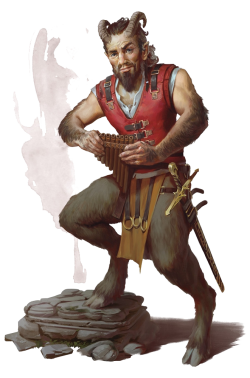
Faun Traits
- Size: 1
- Speed: 6 (strider)
- Bonus Languages: Sylvan
- Senses: keen_hearing
- Animal Friendship: Animals not controlled by a hostile creature or harmful effect are friendly to you until you do something to change their disposition.
- Avoidance: You impose 1 bane on rolls against your Defense and Agility. You lose access to this trait while you are injured, confused, stunned, or unconscious.
Faun Novice Path
Level 1 Faun
Suggested Attributes: Strength 10, Agility 13, Intellect 10, Will 10
Natural Defense: 11
Health: 14
Bonus Languages: Common, Sylvan (from ancestry trait)
- Astonishing Reflexes: You can use this talent when you dodge. Until the end of your next turn, you increase your Speed by 1, make attribute rolls with boon, and deal an extra 1d6 damage with successful attacks. Once you use this talent, you lose access to it (luck ends).
- Fleet-Footed: When you use an action to run, you quadruple your Speed instead of merely tripling it.
- Outmaneuver: When you get a success on a roll to attack an enemy, and the result of your roll exceeds the target’s Intellect score by 5 or more, the target becomes confused until the start of your next turn.
Level 2 Faun
Health: +4
- Springing Strike: If you move at least 3 yards before you attack, your attack deals an extra 1d6 damage and you gain the Slippery trait until the start of your next turn.
- Swift Recovery: You can use an action, or a reaction when you are harmed, to heal half your damage total and move up to your Speed. You have the Slippery trait for this movement. Once you use this talent, you lose access to it until after you rest.
Level 5 Faun
Health: +4
Bonus Damage: +1d6
- One Step Ahead: Once per round, when you get a success on a roll to attack, increase your Speed by 2 and increase by 1 the number of banes imposed on rolls against your Defense and Agility from the Avoidance trait. These benefits last until the start of your next turn.
- Springing Assault: If you move at least 3 yards before you attack, your attack deals an extra 2d6 damage and you gain the Slippery trait until the start of your next turn. (This talent replaces Springing Strike.)
~~hero-subtitle Elemental Connections ~~
Genasi
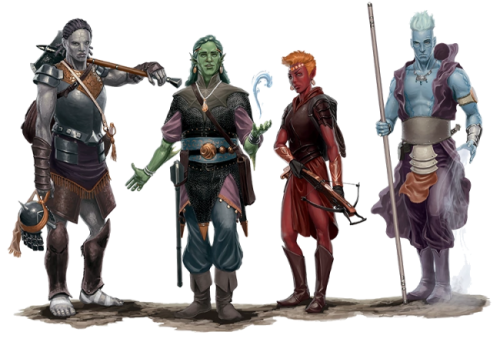
Those who think of other planes at all consider them remote, distant realms, but planar influence can be felt throughout the world. It sometimes manifests in beings who, through an accident of birth, carry the power of the planes in their blood. The genasi are one such people, the offspring of genies or other powerful elementals and mortals.
Genasi Traits
- Size: 1
- Speed: 5
- Bonus Languages: Primordial
Choose what elemental plane you are connected to:
- Air Affinity
- Speed: +2 (Strider)
- Critical Winds: Whenever you get a critical success, you can choose one creature or object within 5 yards. The target makes a Strength roll. on a failure, you push the target up to 5 yards away from you.
- Earth Affinity
- Natural Defense: +3
- Health: +5
- Critical Tremors: Whenever you get a critical success, you can choose one creature or object within 5 yards. A target creature makes an Agility roll; on a failure, it falls prone. A target object takes 1d6 damage.
- Fire Affinity
- Flaming Strikes: Your attacks with melee weapons deal an extra 1d6 damage as you envelop them in flame.
- Critical Spark: Whenever you get a critical success, you can choose one creature or object within 5 yards. The target makes an Agility roll. On a failure, it takes 1d6 damage.
- Water Affinity
- Strong Swimmer: You gain the swimmer trait for your movement, allowing you to use your full speed in water.
- Flowing Like the River: You gain the slippery trait for your movement, stopping foes from getting free attacks when you leave their range.
- Water Breather: You are immune from suffocation when underwater.
- Critical Flow: Whenever you get a critical success, you can choose one creature or unsecured object within 5 yards of you. A target creature makes a Strength roll. On a failure, or if you target an object, you pull it up to 5 yards toward you.
- Metal Affinity
- Armored Defense: +1
- Health: +2
- Critical Strike: Whenever you get a critical success, you can choose one metal object within 5 yards of you. If the targeted is held by a creature (including weapons or worn armor), they make a Strength roll to maintain control of the item. On a failure, they take damage equal to the weapon as it strikes them or 1d6 damage if it is armor or another held item. If you target a free-standing object, choose a creature within 1 yard of the object, they must make an Agility roll to avoid being struck by the metal object, taking 1d6 damage on a failure.
- Wood Affinity
- Health: +5
- Arms of Vines: Your movement gains the climber trait, allowing you to climb at your full speed.
- Critical Grasp: Whenever you get a critical success, you can choose one creature within 5 yards of you. The creature makes a Strength or Agility check, and on a failure is held by vines that appear around them until the end of their next turn.
Genasi Novice Path
Level 1 Genasi
Suggested Attributes: Strength 11, Agility 10, Intellect 10, Will 12
Natural Defense: 10
Health: 14
Languages: Common, Primordial (from ancestral trait) Tradition: One (See Elemental Tradition) Spells: Two novice
- Elemental Tradition You gain a tradition depending on your Elemental Connection:
- Air: aeromancy
- Earth: geomancy
- Fire: pyromancy
- Water: hydromancy
- Metal: conjuration or technomancy
- Wood: animism
- Elemental Augmentation You gain an additional benefit depending on your Elemental Connection:
- Air You are immune to Suffocation.
- Earth Your movement score gains the burrower trait.
- Fire You do not take damage from touching fire.
- Water You can squeeze into a space a quarter of your size, as opposed to the standard half of your size. You suffer none of the squeezing drawbacks when squeezing into a space half of your size.
- Metal You are immune to the Frightened affliction.
- Wood You are immune to the Poisoned affliction.
- Elemental Boon You gain a boon on certain rolls depending on your Elemental Connection:
- Air: You roll with 1 boon when using your aeromancy magic.
- Earth: You roll with 1 boon when using your geomancy magic.
- Fire: You roll with 1 boon when using your pyromancy magic.
- Water: You roll with 1 boon when using your hydromancy magic.
- Metal: You roll attacks with 1 boon when using a metal weapon.
- Wood: You roll with 1 boon when using your animism magic.
Level 2 Genasi
Health: +4
Bonus Damage: +1d6
Tradition: One
Spells: Two novice
- Elemental Recovery: You can use an action to heal half your damage total. Once you use this talent, you lose access to it until after you rest. You then gain the following benefit depending on your Elemental Affinity:
- Air: Your movement gains the Fly trait until the end of your next turn. If you are still in the air at the end of your next turn, you will fall as normal, but do not take damage.
- Earth: You become immune to damage from ordinary sources until the end of your next turn.
- Fire: Flames burst from you to fill a Size 3 space centered on you before dissipating. Each object in the space takes damage equal to twice your level, and — if flammable — catches fire. Each creature in the space other than you takes damage equal to your level and makes a luck roll. On a failure, the creature takes extra damage equal to your level and catches fire (luck ends).
- Water You end the held, impaired, on fire, poisoned, and prone afflictions if you have them. Then you become immune to those afflictions until the end of your next turn.
- Metal: Metal spikes extrude from your body, dealing damage to any adjacent creature equal to your level. If you are held or grabbed, that condition ends and you deal additional damage equal to your level to the creature that held you. These spikes remain until the end of your next turn and until they retract, any creature making a free attack against you takes damage equal to your level before making that attack roll.
- Wood: Choose one other creature within 5 yards, that creature ends one affliction affecting them and heals 5 damage.
Level 5 Genasi
Health: +4
Spells: One expert
- Elemental Form: You gain one of the following based on your associated elemental affinity:
- Air: You can use this talent to gain the fly and hover tags for your movement for 1 minute. Once you use this talent, you lose access to it until after you rest. You are also permanently immune to fall damage.
- Earth: You permanently burrow at full speed. You can also use this talent to become insubstantial for the purposes of moving through earth or stone for 1 minute. If this effect ends while you are inside of a solid object you will be ejected to the nearest empty space. Once you use this talent, you lose access to it until after you rest.
- Fire: You can use an action to cover yourself with flames that do not harm you or your possessions for 1 minute. While wreathed in flames, you deal 1d6 damage to any creature that starts its turn within 1 yard of you or moves to enter this 1 yard radius on their turn. Once you use this talent, you lose access to it until after you rest.
- Water: Your movement permanently gains the water_walk trait, allowing you to walk across liquid as if it was difficult terrain. You can use an action to gain the Squeeze (1 inch) trait for your movement, allowing you to squeeze through openings as small as 1 inch as you temporarily convert your body to water. Once you use this talent, you lose access to it until after you rest.
- Metal: You permanently gain Natural Defense +1. You can use an action to turn your body to metal, granting you +2 Armored Defense for 1 minute. Once you use this talent, you lose access to it until after you rest.
- Wood: Your movement permanently gains the Strider trait. You can use an action to enable you to meld with and pass between plants. For 1 minute, you, once per turn, touch a plant an expend 1 yard of movement to appear next to another plant you can see. Once you use this talent, you lose access to it until after you rest.
Lore
Elemental Origins
The Elemental Planes are often inhospitable to natives of the Material Plane: crushing earth, searing flames, boundless skies, and endless seas make visiting these places dangerous for even a short time. The powerful genies, however, don’t face such troubles when venturing into the mortal world. They adapt well to the mingled elements of the Material Plane, and they sometimes visit—whether of their own volition or compelled by magic. Some genies can adopt mortal guise and travel incognito.
During these visits, a mortal might catch a genie’s eye. Friendship forms, romance blooms, and sometimes children result. These children are genasi: individuals with ties to two worlds, yet belonging to neither. Some genasi are born of mortal–genie unions, others have two genasi as parents, and a rare few have a genie further up their family tree, manifesting an elemental heritage that’s lain dormant for generations.
Occasionally, genasi result from exposure to a surge of elemental power, through phenomena such as an eruption from the Inner Planes or a planar convergence. Elemental energy saturates any creatures in the area and might alter their nature enough that their offspring with other mortals are born as genasi.
Heirs to Elemental Power
Genasi inherit something from both sides of their dual nature. They resemble humans but have unusual skin color (red, green, blue, or gray), and there is something odd about them. The elemental blood flowing through their veins manifests differently in each genasi, often as magical power.
Seen in silhouette, a genasi can usually pass for human. Those of earth, metal or water descent tend to be heavier, while those of air, wood or fire tend to be lighter. A given genasi might have some features reminiscent of the mortal parent (pointed ears from an elf, a stockier frame and thick hair from a dwarf, small hands and feet from a halfling, exceedingly large eyes from a gnome, and so on).
Absent Parents
Genasi almost never have contact with their elemental parents. Genies seldom have interest in their mortal offspring, seeing them as accidents. Many feel nothing for their genasi children at all.
Some genasi live as outcasts, driven into exile for their unsettling appearance and strange magic, or assuming leadership of savage humanoids and weird cults in untamed lands. Others gain positions of great influence, especially where elemental beings are revered. A few genasi leave the Material Plane to find refuge in the households of their genie parents.
Genasi Lands
As rare beings, genasi might go their entire lives without encountering another one of their kind. There are no great genasi cities or empires. Genasi seldom have communities of their own and typically adopt the cultures and societies into which they are born. The more strange their appearance, the harder time they have. Many genasi lose themselves in teeming cities, where their distinctiveness hardly raises an eyebrow in places accustomed to a variety of different people.
Those living on the frontier, though, have a much harder time. People there tend to be less accepting of differences. Sometimes a cold shoulder and a suspicious glare are the best genasi can hope for; in more backward places, they face ostracism and even violence from people who mistake them for fiends. Facing a hard life, these genasi seek isolation in the wilds, making their homes in mountains or forests, near lakes, or underground.
Some lands have permanent genie members of society, these lands are uncommon but feature many more genasi.
Genasi Names
Genasi use the naming conventions of the people who raised them.
Genasi Subtypes
Air
As an air genasi, you are descended from the djinn. As changeable as the weather, your moods shift from calm to wild and violent with little warning, but these storms rarely last long.
Air genasi typically have light blue skin, hair, and eyes. A faint but constant breeze accompanies them, tousling the hair and stirring the clothing. Some air genasi speak with breathy voices, marked by a faint echo. A few display odd patterns in their flesh or grow crystals from their scalps.
Earth
As an earth genasi, you are descended from the cruel and greedy dao, though you aren’t necessarily evil. You have inherited some measure of control over earth, reveling in superior strength and solid power. You tend to avoid rash decisions, pausing long enough to consider your options before taking action.
Elemental earth manifests differently from one individual to the next. Some earth genasi always have bits of dust falling from their bodies and mud clinging to their clothes, never getting clean no matter how often they bathe. Others are as shiny and polished as gemstones, with skin tones of deep brown or black, eyes sparkling like agates. The most arresting have fissures in their flesh, from which faint light shines or a coating of tiny crystals.
Fire
As a fire genasi, you have inherited the volatile mood and keen mind of the efreet. You tend toward impatience and making snap judgements.
Nearly all fire genasi are feverishly hot as if burning inside, an impression reinforced by flaming red, coal-black or ash-gray skin tones. The more human-looking have fiery red hair that writhes under extreme emotions while more exotic genasi feature actual flames dancing up their heads. Fire genasi voices sound like crackling flames, and their eyes flare when angered. Some are accompanied by the faint scent of brimstone.
Water
The lapping of waves, the spray of sea foam on the wind, the ocean depths—all of these things call to your heart. You wander freely and take pride in your independence, though others might consider you selfish.
Most water genasi look as if they just finished bathing, with beads of moisture collecting on their skin and hair. They smell of fresh rain and clean water. Blue or green skin is common, and most have somewhat overlarge eyes, blue-black in color. A water genasi’s hair might float freely, swaying and waving as if underwater. Some have voices with undertones reminiscent of whale song or trickling streams.
Metal
As a metal genasi, you have a very tight grip on your emotions, making you seem cold to others. This does not mean you are slow to react, metal genasi can easily change themselves to adapt to any situation they may face.
Earth genasi often have smooth metallic flesh, dull iron skin spotted with rust, shiny gold skin that reflects in the sunlight, rough uneven ore with spots of sunlight. Rarely gems can be found in their body.
Wood
The growing of grass, the creeping of vines, the living forest—all of these things call to you. You are most at home in nature.
Most wood genasi look have thick, green hair and have skin that looks and feels like bark. Plants around them will grow towards them and they can be mistaken for adharita. A wood genasi will smell of nature and flowers can sprout from different parts of their body.
~~hero-subtitle Nilbog spelled backwards ~~
Goblin
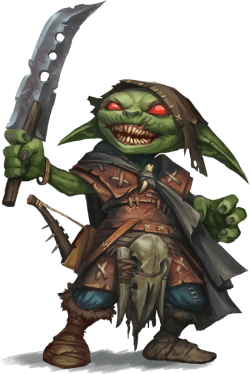
Goblin Traits
- Size: 1/2
- Speed: 6 (slippery)
- Bonus Languages: Goblish
- Senses: dark_vision, keen_vision
- Immune: infection
Goblin Novice Path
Level 1 Goblin
Suggested Attributes: Strength 9, Agility 14, Intellect 11, Will 9
Natural Defense: 12
Health: 12
Bonus Languages: Common, Goblish (from ancestry trait)
- Goblin Boons: At the start of your turn, if you are not confused, controlled, stunned, or unconscious, you can use this talent to gain a number of goblin boons equal to 1d6 + half your level and retain them until you expend them or you regain the use of this talent. When you make an attribute roll or a luck roll, you can add one or more goblin boons to your roll. In addition, if you roll a 1 on any of these boons, you can discard the result and roll again, though you must use the result of the second roll, even if it’s another. Once you use this talent, you lose access to it for 1 minute.
- Underhanded Strike: When a creature within your reach is harmed, you can use a reaction to attack the harmed creature. Once you use this talent, you lose access to it (luck ends).
Level 2 Goblin
Health: +2
- Goblin Tactics: When you get a success on a roll to attack a target within the reach of one of your allies, your attack deals an extra 1d6 damage. If the result of your roll was a critical success, the target also becomes Agility impaired until the start of your next turn.
- Wicked Recovery: You can use an action to make an attack. If the roll to attack results in a success, you also heal half your damage total. If the roll results in a failure, you increase your Speed by 4 until the end of your turn. Once you use this talent, you lose access to it until after you rest.
Level 5 Goblin
Health: +2
Bonus Damage: +1d6
- Shadow Stalk (Magical): If you are neither held nor stunned when an enemy you can see starts its turn, and you are hidden from that enemy, you can use a reaction to become invisible, move up to your Speed, then become visible again.
~~hero-subtitle Folk living a simple life ~~
Hobbit
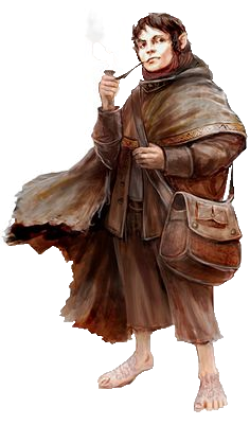
Hobbits are a friendly folk who mostly keep to themselves farming, socializing and living a simple, but happy life.
Hobbit Traits
- Size: 1/2
- Speed: 5
- Immune: poison
- Senses: keen_smell
- Pluck: You can use this trait when you make an attribute roll and get a result you dislike. Discard the result and make a new attribute roll. You must use the second result, even if it is worse than the first. Once you use this trait, you lose access to it for 1 minute.
Hobbit Novice Path
Level 1 Hobbit
Suggested Attributes: Strength 10, Agility 12, Intellect 11, Will 10
Natural Defense: 12
Health: 14
- Fast on your Feet: When you move, you can cross spaces occupied by creatures of any Size. In addition, whenever your movement would enable a creature to make a free attack against you, you can expend 1 yard of movement to prevent it.
- Lucky Strike: When you get a critical success for an attack, you can move up to half your Speed.
- Friend to Animals: You gain the Beast Tongue talent from the animism magical tradition. Reprinted below for reference:
- Beast Tongue (Magical): You can make yourself understood by any ordinary animal that can see and hear you, and you can understand the gist of what an ordinary animal would convey through the sounds and gestures it makes. If you make the animal friendly, it might perform services for you at the Sage’s discretion.
Level 2 Hobbit
Health: +4 Bonus Damage: +1d6
- Lucky Recovery: You can use an action, or a reaction when you are harmed, to heal half your damage total, and make luck rolls with 1 boon until the end of your next turn. Once you use this talent, you lose access to it until after you rest.
- Parting Shot: If you are not confused, controlled, stunned, or unconscious when you move out of a space occupied by a creature, you can use this talent to cause that creature to take d6 damage. Once you use this talent, you lose access to it (luck ends).
Level 5 Hobbit
Health: +4
Speed: +1 (strider)
- Lucky Break: You can use this talent when you would become harmed. You ignore the harm. Once you use this talent, you lose access to it until after you rest.
- Uncanny Luck: You can use this trait when you make a luck roll and get a result you dislike. You can reroll with 1 boon. You must keep the new result. Once you use this talent, you lose access to it until after you rest.
Lore
Short & Furry-Footed
Hobbits — like dwarves and gnomes —are known for their small stature, but are a bit bigger and plumper than gnomes, and not as squart and boxy as dwarves. Hobbits are not capably of facial hair outside of sideburns, but their large, tough feet are covered in very thick fur, making shoes and other foot-coverings unnecessary.
Hobbits have a variety of skin and hair colors similar to humans. Their hair is much thicker than a human’s, but not as oily and solid as that of dwarves.
A Love of Nature
Hobbits tend to worship nature itself, the planet and plants especially. Their only recognizable deity is Mother Earth herself, but the hobbits themselves do not prefer using such a term in general. They have no organized churches or meetings or even much in the way of rituals and rules. Instead they focus on personal prayers of thanks and devotion.
The religious figures that do exist are nomadic sages traveling from hobbit town to hobbit town spreading knowledge about nature and techniques to a better harvest.
In a Hole in the ground there lived a hobbit.
Not a nasty, dirty, wet hole, filled with the ends of worms and a noozy smell, nor yet a dry, bare sandy hole with nothing in it to sit down on or to eat: it was a hobbit-hole, and that means comfort..
What is a hobbit? They are a little people, about half our height, and smaller than the bearded dwarves. Hobbits have no beards. There is little or no magic about them, except the ordinary everyday sort which helps them to disappear quietly and quickly when large stupid folk come blundering along, making a noise like elephants which they can hear a mile off. They are inclined to be fat in the stomach; they dress in bright colours (chiefly green and yellow); wear no shoes, because their feet grow natural leathery soles and thick warm brown hair like the stuff on their heads (which is curly); have long clever brown fingers, good-natured faces, and laugh deep fruity laughs (especially after dinner, which they have twice a day when they can get it). Now you know enough to go on with.
—J.R.R. Tolkein,
The Hobbit.
Small Farming Hamlets
Hobbits are very agricultural and tend to shy away from forming large cities. They form small farming communities where large Hobbit families stay for generations. Each Hobbit family remains self-sufficient and they merely stay in such a large community for protective purposes as well as socialization and a sense of community. While hobbits are always happy to offer a hand to all who need it, a hobbits pride will stop them from asking for assistance.
They live within their distinctive “hobbit holes” in hills that get covered in growth over time. These cozy homes can look like a series of small hills from a distance, but for larger families can extend and even go further underground.
A Community of Homebodies
A hobbit is seldom happier than when they are sitting at home by their fire, sipping tea with a good friend discussing the nonevents of the day. Excitement tends not to suit them, after all why spend all that time getting all hot and bothered when there is bread, cheese and a bit of wine in the larder and good company all around?
If a hobbit is seen outside of their village, either something happened to them, or they are a city hobbit. City hobbits do not necessarily live inside of a city, but generally live outside of the normal bounds of hobbit society. Less hairy of foot and slightly taller, city hobbits are a common sight for other races, but other hobbits will sit around their home and tut about what those city hobbits could be thinking and how they are bringing shame to the good name of hobbit.
There and Back Again
City hobbits are common adventuring sights, even if they are the less populace subrace. To see a hobbiton hobbit outside of his hobbiton, and adventuring no less, is a very rare sight. Typically something has happened to their home or they are a very different kind of hobbit, perhaps on some personal quest.
Hobbit Names
Hobbits tend to have simple names, never more than two syllables and really more than 5 letters is just being a bit fancy. Hobbit surnames are typically slightly altered versions of the names of plants, animals and other natural things.
Male Names: Balbo, Bilbo, Carl, Folco, Griffo, Halfred, Iago, Jolly, Lotho, Marco, Nick, Odo, Robin, Sam, Will
Female Names: Amie, Bell, Cora, Daisy, Ellie, Gilly, Nina, Nora, Pansy, Pearl, Poppy, Rhiva, Salvia, Willa
Surnames: Banks, Clay, Diggle, Gardner, Hayward, Lightfoot, Smallburrow, Underhill, Whitefoot
~~hero-subtitle It's us. ~~
Human
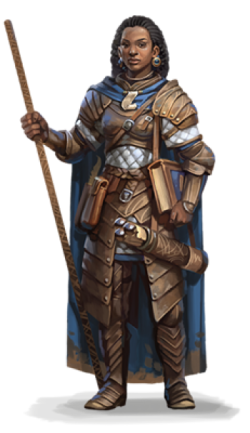
Humans are a shorter-lived, resilient species. Easily adaptable to any environment — assuming it doesn't lack oxygen or solid ground, but they're working on that — humans thrive across Aldrea.
Human Traits
- Size: 1
- Speed: 5
- Human Adaptability: Humans are quick to adjust to different circumstances and grow. Increase the scores of two different attributes by 1 each.
~~hero-subtitle Sneople ~~
Naga
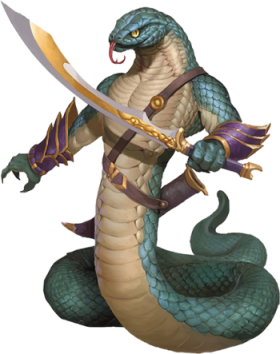 Naga resemble enormous snakes with shoulders, arms, and a torso that resembles a humanoid form. They typically hold their heads and torsos off the ground while moving. They adorn their torsos with armor, jewelry, and a vague nod toward the clothing worn by other races. Male naga typically have broad hoods, wider than their shoulders, while females tend to have narrower hoods and longer faces.
Naga Traits
- Size: 1
- Speed: 4 (Slippery)
- Natural Defense: +1
- Bonus Languages: Nagan
- Senses: keen_scent
- Natural Weapons: You can use your fangs as a nimble natural melee weapon that deals 1d6 damage.
- Naga Venom: A flesh-and-blood creature that takes damage from your fangs makes a Strength roll. On a failure, the creature becomes poisoned (luck ends).
- Cold-Blooded: You make rolls to resist the effects of cold exposure with 2 banes.
- Serpentine: You have the lower body of a serpent. You can not run, and you make rolls to jump or leap with 1 bane. You impose 1 bane on rolls made to move you or knock you prone, and you make rolls to avoid being moved or knocked prone with 1 boon.
Naga Novice Path
Level 1 Naga
Suggested Attributes: Strength 10, Agility 11, Intellect 12, Will 10
Natural Defense: 11 (This includes the bonus from your ancestral trait)
Health: 14
Languages: Common, Nagan (from ancestral trait)
- Spit Venom: You can use an action to spit venom from your mouth. Target one creature within yards. Make a Strength roll against the target’s Agility. On a success, the target becomes poisoned (luck ends). Once you use this talent, you lose access to it (luck ends).
- Naga Weapon Training: You ignore the requirements for using melee weapons. When you attack with a Nimble weapon, you roll with 1 boon. In your hands such weapons have the slashing trait
- Lunging Bite: When using a Nimble weapon, once per turn you can treat your reach with that weapon as one greater.
Level 2 Naga
Health: +4
Bonus Damage: +1d6
- Slithering Recovery: You can use an action, or a reaction when you are harmed, to heal half your damage total. You then increase your Speed by 2 until the end of your next turn. Once you use this talent, you lose access to it until after you rest.
- Strong Venom: Whenever you cause a creature to become poisoned from your Naga Venom trait or your Spit Venom talent, the target also becomes confused until the poisoned affliction ends.
Level 5 Naga
Natural Defense: +1
Health: +4
Speed: +1
- Wicked Fangs: When you attack with your fangs, you roll with boon, and your attack deals an extra 1d6 damage. In addition, enemies poisoned by you make luck rolls to end the affliction with 1 bane.
Lore
Cyclical People
Naga believe in a cyclical world in a constant state of rebirth where time cycles and repeats following the same patterns, but not the same events. Firm believers in reincarnation, the Naga are an introspective people believing that there are certain skills and knowledge to practice and learn to grow closer to the World Serpent which surrounds the world and keeps the cycles turning.
Different Naga communities have different interpretations of this basic belief set. Some believe that Naga are those closest to the World Serpant and thus a superior race. Some Underdark Naga cults, often known as the Cult of the Yuan-Ti implement breeding and training programs to become the most perfect Naga possible to rule the world as they feel they are of the creator races. Others believe the World Serpent is a force, and while there is a cycle of rebirth, it cannot be influenced and you cannot influence any future lives as your past lives cannot influence your current.
Delicate Beginnings
Naga are hatched from eggs, to keep these eggs safe they are often protected communally in the center of a Naga village. This area is often called the Brood Chamber and highly trained and honored Broodguards are set to guard the eggs at all times. In order to distinguish eggs, they are stamped with the family symbol of the mother along with the first character of the father's name.
After hatching, the baby Naga are moved to a Kindergarten that is similarly well-guarded due to the delicate nature of the young Naga. Their skeletons are weak and they have little defense. They appear like small snakes, their hoods barely noticeable and featuring only stubs instead of arms.
Because of this, Naga villages are often hidden deep within woods, in caves or other hidden areas.
Uncommonly Found
On the surface world, Naga are not common. This is mostly due to life underground being safer and easier for Naga in general. There are pockets of settlements throughout andravidas and gondwana and are well-known but not highly populous within long tu di. Mokatuwa is the only surface continent with any Naga in large numbers and the only surface continent where they hold large political power, ruling several kingdoms.
Leaving the Brood
Naga are not a common adventuring sight on the surface. In the underdark they are quite common in many areas. Outside of mokatuwa, the rarity of Naga makes them distrusted as adventurers.
Adventurer Naga do so for a variety of reasons: whether for philosophical or religious reasons or to merely seek their fortune.
Naga Names
Naga have matrilineal surnames featuring long s's and hissing noises with an associated symbol, while Naga given names follow that of the local culture.
Surnames. Ssarmm, Ssstulk, Merssshalk, Messanna, Sseth, Ssyra
~~hero-subtitle The living dead ~~
Revenant
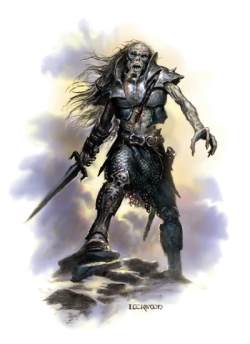
Whether due to your own will, the intervention of a god, or an odd curse, you are dead, yet alive. Your soul still clings to your still decaying body, giving you hopefully enough time to finish your unfinished business or complete the tasks assigned to you by whatever higher power has cursed you to unlife.
Revenant Traits
- Size: 1
- Speed: 5
- Additional Descriptor: Undead
- Languages: Common
- Immune: poisoned; deprivation, exposure, infection, suffocation
- Feign Death: You appear to be a corpse while you are prone or unconscious.
- Divine Doom: You make luck rolls with 1 bane.
- From the Brink: You can use a reaction when you become incapacitated to heal 3d6 damage. Once you use this trait, you lose access to it until after you rest.
Revenant Novice Path
Level 1 Revenant
Suggested Attributes: Strength 12, Agility 9, Intellect 11, Will 11
Natural Defense: 9
Health: 14
- Divine Sanction: You lose the Divine Doom trait.
- Rising Rage: When you are harmed, you make rolls to attack with 1 boon for a duration of 1 minute. If you already benefit from this talent, increase the number of boons by 1 to a maximum of 3 boons.
Level 2 Revenant
Health: +4
- Vicious Recovery: You can use an action, or a reaction when you are harmed, to heal half your damage total. Then, for 1 minute, one attack you make each round deals an extra 1d6 damage. You can use this talent three times and regain expended uses after you rest.
Level 5 Revenant
Health: +4
Bonus Damage: +1d6
- Fighting Style: Choose one fighting style from the options available to fighter.
- Relentless Wrath: When you have 3 boons from your Rising Rage talent, your attacks deal an extra 1d6 damage, and you become immune to the held and slowed afflictions.
~~hero-subtitle The living clothes ~~
Tatterdemalion
As far as you can tell, you have always been a pile of clothes. You have no memory of what came before you realized that your hands were gloves, your torso a shirt, and that under all the clothes you wear there’s nothing at all. While not exactly memories, you do have flashes of something in your mind’s eye—disjointed and chaotic experiences. You know how to practice a trade or recall information about a particular subject, but beyond that, nothing.
Tatterdemalion Traits
- Size: 1/2
- Additional Descriptor: Spirit
- Senses: true_vision
- Immune: asleep, blinded, deafened, poisoned, slowed; exposure, deprivation, infection, suffocation
- Cloth Body: Your body consists of bits and scraps of cloth all knotted together. You ignore any effect that would transform you or change your shape. When you take damage from fire, you take an extra 1d6 damage.
- Spiritual Existence: When you become incapacitated, the cloth making up your body falls to the ground at your space, and you are stunned instead of unconscious. If you heal any damage, you flow into the nearest pile of cloth within 20 yards and inhabit it. If no such pile exists, you remain stunned until one comes within this range. If you die from being incapacitated, your spirit descends to the Underworld, and nothing short of divine intervention can restore you to your previous form.
Tatterdemalion Novice Path
Level 1 Tatterdemalion
Suggested Attributes: Strength 10, Agility 10, Intellect 10, Will 13
Natural Defense: 11
Health: 10
Languages: Common
- Spectral Touch (Magical): You can use an action to extend a spectral appendage from your body. Target one creature within reach. Make an Agility roll against the target’s Strength. On a success, the target takes 1d6 damage, and becomes weakened (luck ends).
- Superior Reflexes: You make Agility rolls with 1 boon, and you impose 1 bane on rolls against your Agility.
Level 2 Tatterdemalion
Health: +2
Tradition: One
Spells: Two novice
- Spiritual Recovery (Magical): While using an action to use Spectral Touch, you make your Agility roll with 1 boon; on a success, the target takes 2d6 damage. In addition, you use this talent to heal half your damage total and, for 1 minute, you make Will rolls with 1 boon and impose 1 bane on rolls against your Will. Once you use this talent, you lose access to it until after you rest.
Level 5 Tatterdemalion
Health: +2
Spells: One expert
Bonus Damage: +1d6
- Hijack Apparel: You can use an action to move from the clothing making up your body to the clothing worn by another. Target one creature within 5 yards that wears clothing of any kind. Make a Will roll against the target’s Agility. On a success, you control the target (luck ends). On a failure, you lose access to this talent for 1 minute. You can use this talent a number of times equal to half your level and regain expended uses after a rest. While you control a target, you occupy its space and move with it when it moves. If the target sustains damage, it takes half of it, and you take the rest. You use actions normally; however, the target you have controlled can make use only of actions normally available to all creatures such as attack, defend, etc.
- Spectral Strike (Magical): While using an action to use Spectral Touch, you make your Agility roll with 1 boon; on a success, the target takes 5d6 damage.
Lore
A ghostly presence
You’re dead. That’s why you can’t remember anything of import, such as your name, your background, or, really, any other details from your past. Who you were, how you lived, who mattered to you, and the circumstances of your death all escape you. For now. What you do know is that you have a body made from bits of clothing—maybe a shirt, possibly a hat—but the rest of you is rags, knotted together in the semblance of a humanoid shape. You replace your pieces all the time, snatching up useful material and incorporating it into your form. Your cloth body stands about 3 feet tall and weighs no more than a few pounds. You decide what kind of clothes make up your form. If you have armor components, the armor protects you as if you were made of flesh and blood. During your existence as a tatterdemalion, you will change out your physical components many times.
Recalling Your Lost Life
It takes no time at all to figure out that you are dead, though the circumstances of your end and why you are still here remain a mystery for now. Memories return, little by little, over time, helping you rebuild the identity you lost. Advancement in your paths represents the progress you make toward restoring your memories, so that by the end of your final quest, you can be sure you will have earned the rest that is to be your reward.
Each time your level increases, you learn a bit more about who you were. You can come up with this information on your own, but you might find it rewarding to have your fellow players reveal something each time instead. The Sage might step in to knit the information together so that it fits into the campaign.
Unwilling to Move On
Ignorance of your past in no way diminishes your eagerness to remain in the mortal world. Something keeps you here—something important that needs doing. This responsibility anchors you when you feel the Underworld’s pull.
Your existence defies the natural order, and reality aims to correct an obvious violation of the rules. You feel something tugging at you all the time, though the sensation in no way discomfits or limits you. It just reminds you that you should not be among the living. The sensation worsens as you sustain injury: Black spots appear in the distance, yawning holes that offer glimpses of the shadowy world beyond. You even hear faint moans of those consigned to oblivion.
Unnatural Nature
As much as you might miss the flavor of a good meal or the relief of a cool drink, you can take in no sustenance, nor do you need it. You can benefit from magical substances, such as potions and the like, by soaking the material constituting your body with the liquid. Sleep never comes over you, but you do find it useful and restorative to have extended periods of downtime.
Your senses change too. You have no ability to smell or taste; such things have no meaning for you. You can feel things through the body you assemble and “hear” by feeling the vibrations in your clothing. You see, sort of, but your vision goes beyond what you had when you were alive. Your vision enables you to see people and objects, but also spirits, invisible things, and recognize visual illusions for what they are.
A Little Upsetting
When people see a pile of clothes wandering around, they act as you might expect them to act, with a little fear, perhaps some loathing too. Luckily, you are small and can squeeze though tight places. When needed, you can stay out of view. You must be mindful of those who hunt spirits, for such people consider you an abomination.
First Glimpses
The first thing you remember is how to do whatever it was that you did when you were alive. Your profession can offer clues about how you died. If you were an academic, perhaps you dis covered something dangerous during your research. Enemies of your faith could have claimed you if you had a religious calling, while battle might have snuffed out your life if you were in the military. Rather than choose a profession, allow the dice to decide to spark your creativity.
Tatterdemalion Names
You can not recall your name, so you have one given to you. Common nicknames include Chuckles, Hob, Rags, Haunt, and Tatters.
~~hero-subtitle Those touched by the lower planes ~~
Tiefling
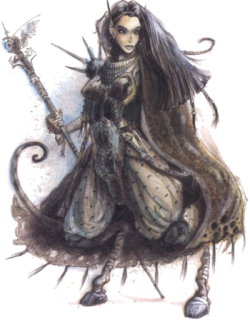
Tieflings are the offspring of devils or demons and a mortal race. Often distrusted due to this connection to the hells, Tieflings are however their own people and are not all as evil as their demonic parentage.
Tiefling Traits
- Size: 1
- Speed: 5
- Bonus Language: Infernal
- Immune: Exposure
- Fire Resistance: You take half damage from fire. Should you catch fire, make a luck roll; on a success, the affliction ends.
Tiefling Novice Path
Level 1 Tiefling
Suggested Attributes: Strength 10, Agility 10, Intellect 11, Will 12
Natural Defense: 12
Health: 14
Bonus Languages: Common, Infernal (from the Tiefling Trait)
Traditions: Two
- Fiery Weapon (Magical): You can use this talent when you attack. Flames erupt from your weapon for 1 minute. Your attacks with it deal an extra 1d6 damage from the flames. If you use this talent on a ranged weapon, the flames affect the ammunition instead. If you use this talent on an ordinary weapon with flammable components, the weapon is destroyed when the effect ends. You have uses of this talent equal to 1+ half your level and regain expended uses after you rest.
- Sulfurous Leap (Magical): When you move at least 1 yard, you can target one empty space you can see within 10 yards. You teleport to that space, then thick clouds of black smoke billow out around you to fill a Size 3 space centered on you. This total obscurement lasts until the start of your next turn. Once you use this talent, you lose access to it for 1 minute..
Level 2 Tiefling
Health: +4
Bonus Damage: +1d6
Spells: Two novice
- Blazing Recovery (Magical): You can use an action to heal half your damage total and become engulfed in flames for 1 minute or until you are doused in water. The flames harm neither you nor anything you wear or carry, and they make you immune to damage from cold and fire. During this blaze, any creature within 1 yard of you attacking you successfully with a weapon or unarmed attack takes 1d6 damage from the flames if their result was less than 20. The damage increases to 3d6 at level 5. Once you use this talent, you lose access to it until after you’ve rested.
Level 5 Tiefling
Health: +4
Spells: One expert
- Fiery Evasion (Magical) You can use this talent when you dodge an attack from an enemy within 1 yard of you. If the roll results in failure, the enemy takes 2d6 damage. In either case, you gain the Slippery trait until the end of your next turn. Once you use this talent, you lose access to it (luck ends).
Lore
Tieflings are the offspring of devils or demons and a mortal race. Often distrusted due to this connection to the hells, Tieflings are however their own people and are not all as evil as their demonic parentage.
Infernal Blood
All Tieflings have infernal bloodline. Commonly this is due to a parent being a devil or demon of some sort, the mortal parent is almost always a human due to the ease of interbreeding, but some elven tieflings have been known. Tieflings can also be born of other tieflings, as tieflings always breed true, but only with other tieflings.
This infernal heritage has a clear effect on their appearance, this blood from the lower planes leads to a great variety in tiefling appearances. Some have long, barbed tails, others have large rams horns, pointjed ears, round ears, cloven hooves similar to a satyr, goats horns, scales, wings, many eyes, 1 eye. It's said that no two tieflings look alike. The easiest indicators are their eyes, which are almost invariable a solid color — black, red, white, silver, or gold — with no visible sclera or pupils. Skin tones also cover almost the full rainbow, but usually settle on common human skin tones, shades of red, purple and charcoal gray.
A Common people
While Tieflings are rarely seen on the Prime Material planes, the outter and inner planes are lousy with them due to both sides,but primarily demons deciding creating more of “their kind” a good way to win the blood_war. When a berk from the prime material reaches beyond the prime and material planes, they often are surprised by how many Tieflings they will see. While they do face some discrimination in the greater multiverse, as a whole Tieflings in the planes have a better go of life than those on the Prime Material.
If one wants proof that Tieflings are not restricted by their parentage, one only needs look to Prima.
After the fall of Primus, the head of the modrons, one of the most lawful gods in the universe, it was a young tiefling who took up the mantle of his godhood and became the new leader and mother of the modrons. There are very few in the universe who could be lawful enough to take up the mantle of Primus and not have it immediately reject them outright. The fact that it was a tiefling, born of demons, the purest agents of chaos in the multiverse is astounding.
Some have tried to argue Orphei was born of the lawful Devils to explain this away, but testimony by her group and those who knew her before her ascension all attest to her Demonic heritage. Being involved in her quest, I know this to be true as well. Our mutual acquaintance and her fellow tiefling, Kylie frequently would shake her head at just how lawful Orphei could be, especially in comparison to her chaotic self.
It is of course still unknown what effect if any her demon blood could be having on the modrons because, of course, they have not yet begun their latest march and Prima has kept them mostly to Mechanus and visitors out as the plane restabilizes after the events of The Final Modron March.
—Estavon the Former Merchant,
An Insider's Guide to The Final Modron March.
A Rare People
Much rarer due to the more limited touch and presence of the lower planes, some tieflings do live in and are born in the prime material planes. They are often viewed with much mistrust, assumed to be a demon or like their devilish forefathers. Many are killed at birth for having their more obvious traits and those that are not are usually more subtle in their demonic and often try to keep that a secret to avoid persecution and murder.
Watchful of Conscription
Many tieflings were once sired for the purpose of fighting in the eternal blood war between demons and devils, thinking that it may turn the tide. Because of this, Tieflings must be careful when visiting the hells if they wish to avoid conscription. Nevertheless, some wish to know their hellish parent and will travel to find more about their past or because they feel they can better fit in there. Some are purposefully raised to fight in the blood war even by human parents involved in a demonic cult.
A People Without a Home
There are few tiefling societies, those that do exist are out in the planes, almost never on any prime material plane. Because of this, many on the material planes become nomadic if they are not able to easily fit into a society. This leads to them becoming adventurers and often makes them distrustful of others as mistreatment is very common.
Tiefling Names
Tieflings born to other races typically have names reflective of that culture. Those born to other Tieflings and those who take on a new name more reflective of their hellish identity have names derived from the Infernal language.
Male Names: Amenos, Amnon, Barakas, Damankos, Ekemon, Iados, Kairon, Leucis, Melech, Mordai, Morthos, Pelaios, Skamos, Therai.
Female Names: Orphei, Kylie, Akta, Anakis, Bryseis, Cirella, Damaia, Ea, Kallista, Lerissa, Makaira, Nemia, Orianna, Phelaia, Rieta.
~~hero-subtitle Flying Bird People ~~
Txori
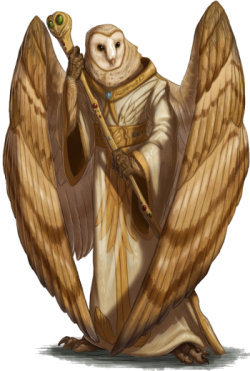
Sequestered in high mountains atop tall trees, the txori — sometimes called birdfolk, bird people, or aarakocra — evoke fear and wonder.
Txori Traits
- Size: 1
- Speed: 5 (Fly)
- Bonus Languages: Txori
- Senses: keen_vision
- Natural Weapons: You can use your beak or talons as a single Nimble natural weapon that deals 1d6 damage.
Txori Novice Path
Level 1 Txori
Suggested Attributes: Strength 10, Agility 13, Intellect 10, Will 10
Natural Defense: 12
Health: 12
Languages: Common, Txori (from ancestral trait)
- Deadly Instincts: While you are not injured, you make Agility rolls with 1 boon; when you make a free attack, you roll with 1 boon.
- Wing Block: When a creature you can see attacks you, you can use a reaction to block the attack with your wing. You impose banes on the roll that enabled the use of this talent. If the attack results in a critical success, however, you lose access to the Fly trait until you heal your entire damage total.
Level 2 Txori
Health: +2
- Diving Attack: You can use this talent when you make a melee attack after flying at least 5 yards. You roll with 1 boon, and the attack deals an extra 1d6 damage.
- Swift Recovery: You can use an action, or a reaction when you are harmed, to heal half your damage total and move up to your Speed. You have the Slippery trait for this movement. Once you use this talent, you lose access to it until after you rest.
Level 5 Txori
Health: +2
Speed: +1 (Fly)
Bonus Damage: +1d6
- Flyby When you use your Diving Attack talent and continue moving after your attack, you do not trigger a free attack from the enemy you attacked.
Lore
Beak and Feather
From below, txori look much like large birds. Only when they descend to roost on a branch or walk across the ground does their humanoid appearance reveal itself. Standing upright, aarakocra might reach 5 feet tall, and they have long, narrow legs that taper to sharp talons.
Feathers cover their bodies. Their plumage typically denotes membership in a tribe. Males are brightly colored, with feathers of red, orange, or yellow. Females often have more subdued colors, usually brown or gray. Their heads complete the avian appearance, being something like a parrot or eagle with distinct tribal variations. The colors and types of plumage they have vary by where they originate from on Aldrea.
Sky Wardens
Nowhere are the Txori more comfortable than in the sky. They can spend hours in the air, and some go as long as days, locking their wings in place and letting the thermals hold them aloft. In battle, they prove dynamic and acrobatic fliers, moving with remarkable speed and grace, diving to lash opponents with weapons or talons before turning and flying away.
Once airborne, a Txori leaves the sky with reluctance. They sometimes forget or ignore vertical distances, and they have nothing but pity for those earthbound people forced to live and toil on the ground. The Txori are linked to the Elemental Plane of Air, calling upon its power to help keep them flying in the air for days.
Avian Mannerisms
The resemblance of txori to birds isn’t limited to physical features. Txori display many of the same mannerisms as ordinary birds. They are fastidious about their plumage, frequently tending their feathers, cleaning and scratching away any tiny passengers they might have picked up. When they deign to descend from the sky, they often do so near pools where they can catch fish and bathe themselves.
Many txori punctuate their speech with chirps, sounds they use to convey emphasis and to shade meaning, much as a human might through facial expressions and gestures. A txori might become frustrated with people who fail to pick up on the nuances; an txori’s threat might be taken as a jest and vice versa.
The idea of ownership of anything not handmade baffles most txori. After all, who can lay claim to the sky? Even when explained to them, they initially find the notion of ownership mystifying. As a result, txori who have little interaction with other people might be a nuisance as they drop from the sky to snatch livestock or plunder harvests for fruits and grains. Shiny, glittering objects catch their eyes. They find it hard not to pluck the treasure and bring it back to their settlement to beautify it. An txori who spends years among other races can learn to inhibit these impulses.
Confinement terrifies the txori. To be grounded, trapped underground, or imprisoned by the cold, unyielding earth is a torment few txori can withstand. Even when perched on a high branch or at rest in their mountaintop homes, they appear alert, with eyes moving and bodies ready to take flight.
Homelands
Txori establish nests in high mountains or in the canopies of old forests. Once tribes of txori settle in an area, they share a hunting territory that extends across an area up to 100 miles on a side, with each tribe hunting in the lands nearest to their colony, ranging farther should game become scarce. A typical colony consists of one large, open-roofed nest made of woven vines. The eldest acts as leader with the support of a shaman.
Great Purpose
Txori enjoy peace and solitude. Most of them have little interest in dealing with other peoples and less interest in spending time on the ground. For this reason, it takes an exceptional circumstance for an txori to leave his or her tribe and undertake the adventurer’s life. Rarely is treasure or glory is enough to lure them from their tribes; a dire threat to their people, a mission of vengeance, or a catastrophe typically lies at the heart of the txori adventurer’s chosen path.
Txori Names
As with much of their speech, txori names include clicks, trills, and whistles to the point that other peoples have a difficult time pronouncing them. Typically, a name has two to four syllables with the sounds acting as connectors. When interacting with other races, txori may use nicknames gained from people they meet or shortened forms of their full names.
A txori of either gender may have one of these short names: Aera, Aial, Aur, Cleek, Deekek, Errk, Heehk, Ikki, Kleeck, Oorr, Ouss, Quaf, Quierk, Salleek, Urreek, or Zeed.
~~hero-subtitle A life under the sea ~~
Vode
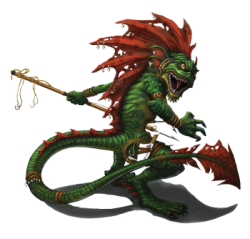
Living primarily in the deepest areas of the ocean floor, Vode are fish-like humanoids whose physiology vary greatly, depending on where they are from.
Vode Traits
- Size: 1
- Speed: 5 (swimmer)
- Additional Descriptor: Amphibious
- Senses: keen_vision
- Bonus Languages: Vo-da
- Fluid Evasion: When you dodge, you gain the Slippery trait and impose 1 bane on rolls against your Defense and Agility until the end of your next turn.
Vode Novice Path
Level 1 Vode
Suggested Attributes: Strength 10, Agility 10, Intellect 10, Will 13
Natural Defense: 11
Health: 14
Languages: Common Hand-talk (most vode cannot vocalize the sounds needed to speak common), Vo-da (from ancestral trait)
- Combat Recovery: You can use an action, or a reaction when harmed, to heal half your damage total and impose 1 bane on rolls to attack you until the start of your next turn. You can use this talent once. You regain the use of this talent after you rest.
- Triton Weapon Training: You ignore the requirements for using melee weapons. In your hands, the javelin and spear have the Nimble and Piercing traits, while the bident and trident have the Piercing and Thrown 5 traits.
Level 2 Vode
Health: +4
Bonus Damage: +1d6
- Blood Rage: You roll to attack injured flesh-and-blood targets with 1 boon. When you get a critical success against an injured target, the target takes an extra 1d6 damage.
- Pinning Attack: You can perform a special attack option when you wield a bident, spear, or trident. If you get a success on a roll to attack, and your roll equals or exceeds the target’s Strength + 5, the target becomes held. This effect lasts until the end of your next turn or until you drop your weapon, move to a position where you can no longer reach the target, or attack a different target with the same weapon.
Level 5 Vode
Natural Defense: +2
Health: +4
Bonus Damage: +1d6
- Improved Combat Recovery: You can use your Combat Recovery talent twice before resting instead of once.
- Tsunami Attack: You can use an action to move up to your Speed, or twice your Speed if you are swimming. At any one point during this movement, you can make a vicious attack against any number of creatures in your reach. For each target, make a roll to attack using a weapon you are wielding. Rather than expend Bonus Damage dice, each successful attack deals your weapon damage plus half your supply of Bonus Damage dice. Once you use this talent, you lose access to it for 1 minute.
Lore
Strong Swimmers
Vode are, in most cases, humanoid, with their height ranging slightly beyond human height ranges on both ends. All Vode have prominent tails, which enhances their swimming abilities, supports them when they stand, and can be used as a natural weapon. Their skin is mostly scaled and varies in color, the most common Vode falling somewhere between blue and green.
Vode need to spend most of their time in the water, with the Deep Sea Vode incapable of spending much time at all above water without a wide array of specialized equipment or spells. River Vode from shallower waters can spend much more time above water, but need to return to the water frequently, while Merfolk lack legs and thus are typically incapable of walking on the land. Given the difficulties and expense surrounding a life outside of the water, the Vode are never seen beyond port towns, if they are to be seen on land at all.
Shallow Waters
The Vode that live in more shallow waters are fewer in number, but live in tight-knit communities completely unlike those of the Deep Sea Empire, and are more comparable to most landwelling societies. These 'River' Vode are the ones most likely to be met by other species and often work with surface-dwelling species to trade and protect their waters and environments. River Vode typically live in large lakes, seas or coastal areas in small homes they build in underwater caves and use rope to segment off most areas and store belongings. Vode settlements in shallow waters are often fairly small, tight-knit groups organized in small towns.When River Vode do live in larger groups it is usually due to a large lake being available in the area to live in.
Vode who live in close proximity with other surface species will typically establish relationships and agreements with the local communities. More isolated Vode can have difficulty communicating with surface creatures and vice versa due to the vast differences in their lived experiences and culture with both groups viewing the other as strange, awkward or naive. However, most societies within close proximity to River Vode settlements learn to greatly appreciate their neighbors, as the River Vode's sense of collectivism can grow to encompass the wellbeing and prosperity of their neighbors.
River Vode get along with surface-dwellers better, but tensions can often be high due to competition for fish and a tendency for cities to pollute their homes. As such, River Vode tend to get along with those who live simpler lives and are likely to better treat those who respect the environment. River Vode due to their limited amphibiousness are more likely to be seen wandering the surface. Often working to improve conditions for their rivers and streams. It is common for a River Vode adventurer’s journey to begin with a quest to find the source of a dam or other harm to their community.
Newest Offspring: grown too large too quick. Now deceased; heart over-exerted to death.
INCIDENT REPORT: Genetic combination results in unsatisfactory spawn. Projected dropout rate below standards. Learned information does not justify losses; this lesson is intrinsic to functional design. Hindsight: outcome obvious. Should not have happened. Team too eager to apply new phenotype. Application with DNA from [ABERR.:(W). IXITX.(NS)] of [TRENCH: L(-8) Q(108.54x,57.992y,15z)] gross display of carelessness.
NOTE: At time, [52(t): 9(h), 1®, 5(w), 10©, 27(d)]. 13/27(d) subjects emitted psionic wavelengths above [Ps. C:3] at (estimated) [10×19 λp]. Emitted wavelengths strengthened as physical composition deteriorated. Unintended discovery: Highest observed psionic wavelengths emitted from subjects in genetic pool classified at [Ps. C:7]. Exact estimations unavailable; psionic emissions destroyed relevant equipment (in addition to other damages caused) [Aside: further exploration of psionic potential deems improvement of laboratory's structural integrity and equipment. Damages and findings on said psionic effects outlined in (InRe/D: Sch.#1/IXIXT(T. L-8))].
CONCLUSION: Results; mixed. Highest unofficially recorded psionic emissions created organically by Vode. Success; obvious. Failure, too; obvious. Grey matter endured at above expected levels (no recorded damage). White matter heated to the point of destruction: Outermost layers heated into a gas. Below; ash. At layers furthest away from grey matter, white matter made into a thick sludge. FORMAL REQUEST: relevant findings sourced (DEPT: ZOO) of species naturally resistant to said effects.
Given results; progress: apparent. Enhancement of [CASTE: PSI/MAG] proven possible and promising. Creation of [TIER 10(PORTAL)]: NEAR VIABILITY.
—END REPORT—
—Unknown Project Lead,
Genetic Experiment: Vode/Ixixt. Development Log #1.
Deep Sea Empires
Vode ideology and culture vary incredibly based on what waters they live in. Vode of the Deep Sea Empire represent the largest demographic of the Vode, as the ocean floor is where their species originated. Nearly encompassing the entire ocean floor, the Deep Sea Empire is an oppressive regime enforcing strict rules and hierarchy. Culturally, great value is placed on cooperation and teamwork as well as military service. The empire is often under attack from a variety of deep sea dangers and creatures that slip through from the_realm_beyond_stars or the elemental_plane_of_water. The Deep Sea Vode vary greatly in appearance and some show psionic capability. The harsh conditions of the ocean floor and exposure to powerful aberrations are said to accelerate their evolution.
Deep Sea Vode are particularly distrustful of outsiders as any non-sea creature that manages to make it to their homes in the bottom of the oceans, they must be quite powerful. Even on the rare occasions one sees one outside of the ocean, communication is difficult as their isolation makes both sides very unfamiliar with each other. There are some Deep Sea Vode seen in the_underdark, which is the most likely place for non-Vode to meet them. These Vode often work with the Deep Dwarves trading in rare materials.
If a Deep Sea Vode is seen outside of the ocean depths, it is almost a guarantee that they are involved in a research mission for one of the many secret projects the Deep Sea Academies are constantly working on, typically around psionics. Due to the difficulty of moving about on the surface comfortably, Deep Sea Vode adventurers are rare and are unlikely to be adventuring for adventuring’s sake.
Vode Names
Much like the Vode’s language, Vode names are unpronouncable in common and cannot be understood on the surface. Also since the Vode language has no easily written language, with the Vode using Common for the little writing they need or can do, it is impossible to express their true names to outsiders.
Vode who are on the surface are named through common Handtalk, often going by their job or accomplishments.
Names: He Who Chases Fish, Slayer of Enemies, Sharp Claw, Home Builder, Fish Breeder, Surface Dealer