Adharita
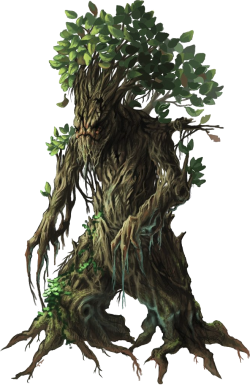
Adharita are as varied as the plants of Aldrea. Strongly connected to nature and the Elemental Plane of Wood, some researchers believe them to be offshoots of Wood Elementals due to their similar appearances.
Adharita Traits
- Size: 1
- Speed: 5
- Additional Descriptor: Plant
- Languages: Common
- Natural Defense: +1
- Natural Weapons: You can use parts of your plant body as a Nimble natural melee weapons that each deal 1d6 damage.
- Plant Bond: While you are within 5 yards of any plant, you have the Awareness 5 trait.
- Plant Form: On your turn, if you are on a surface made from earth, you can use this trait to reduce your Speed to 0. The effect lasts until you end it (not an action) or become unconscious. While subject to this trait, you ignore any ordinary effect that would move you. To all others, you appear to be a normal plant.
- Flammable: You take double damage from fire. You roll to over come being on fire with 1 bane.
Adharita Novice Path
Level 1 Adharita
Suggested Attributes: Strength 12, Agility 9, Intellect 10, Will 12
Natural Defense: 11 (includes the increase from your ancestry trait)
Health: 14
Languages: Common and one other langauge
Traditions: Two
- Plant Strike (Magical): You can use this talent when you attack with your natural weapons. You can target a creature on the ground or within reach of an ordinary plant within 5 yards of you. On a critical success, the target becomes held until the start of your next turn.
Level 2 Adharita
- Natural Defense: +1
- Health: +4
- Bonus Damage: +1d6
- Spells: Two novice
- Wild Recovery (Magical): You can use an action to heal half your damage total and turn the ground within 5 yards of you into challenging terrain that remains for 1 minute. Any enemy that ends its turn on challenging terrain created by this talent takes 1d6 damage, or 2d6 damage if prone. Once you use this talent, you lose access to it until after you rest.
Level 5 Adharita
- Natural Defense: +1
- Health: +4
- Spells: one expert
- Grow the Woods (Magical): You can use an action to cause plants to grow up from the ground all around you. Target up to six Size 1 spaces on the ground within 10 yards: from each space erupts a thorny, grasping plant. Any creature in the tar get space makes an Agility roll. On a success, the creature is pushed to the nearest empty space of its Size of your choice. On a failure, the creature takes 2d6 damage and becomes held (luck ends). It can overcome this effect with a successful Strength roll. The growth remains until destroyed (Health 10) or until you use this talent again. You can use this talent three times. You regain expended uses after you rest.
Lore
Ancient Roots
It is believed that Adharita were among the first creatures to move across the surface of Aldrea-muvarin. It is said the first Adharita were born of a powerful surge from the elemental_plane_of_wood, awakening ordinary plants to sentience. There are adharita all over the planet now and some of the older Adharita spend much of their time dormant, appearing as oddly shaped plants, only awakening when needed.
Because of their age and their connection to nature, Adharita are highly valued as guides in the wilderness and many act as stewards of nature, stepping in when other races may throw an ecosystem out of balance or endanger a forest.
A varied people
Councils of Ents, groups of moving, animated bushes, tiny flowing fields of flowers, masses of sneaking vines, these are all members of the Adharita. They are divided into two main categories, perennials and annuals. The perennials are typically larger and include the ent. Living for potentially thousands of years, perennials are often slow to change or react, but possess great knowledge and strength. Typically perennials are more wooden and less humanoid in appearance.
Annuals are smaller, faster-growing and quicker to react to situations. They tend to stay near perennials, with the perennials being the guiding force while annuals protect them and deal with other races. Many younger annuals grow their bodies into a more humanoid appearance (looking like leafy elves or humans) when they grow up near an established settlement of another race. Perennials tend to look down upon this.
Ivy shifted silently as Fennel laid themself on the forest floor. Their time had come. One day, so would her's. Far from home and having spent half their life away from the grove where they was born, Fennel felt no fear. Content to return to the soil, they closed their eyes. Immediately the leaves that adorned their head became just a bit less vibrant, and Ivy knew they were gone. She knelt down and said a quick goodbye. They had finished their quest, but Fennel could not complete the Journey home. She went back to the grove alone…
…She returned 10 months later and took up camp on the spot until she saw the beginnings of a seedling and a new life.
Short Stories About Interesting Creatures
A different culture
All Adharita begin life as a lumpy looking seedling with stunted proportions and typically look about the same. These seedlings are raised in a nursery by perennials and are raised there until they have sprouted enough to move about safely on their own. Adharita reproduce through the spreading of pollen and as such have no concept of “parents.”
Modern technology and non-nature magics confuse many adharita, but they do work alongside other races with agriculture and trade as long as their end of the bargain is upheld. If you cross an adharita community, prepare to wait a very long time for them to be willing to trust you again, potentially centuries later when some of the older perennials have died.
Fierce Protectors
When an Adharita becomes an adventurer it is often to protect their homeland or to get revenge on those who may have burnt down or otherwise polluted their home. Others travel the land teaching others how to live in harmony with nature or to experience more of life.
Adharita Names
Adharita are typically named after the plants that make up their body, but will sometimes go by names of nearby “flesh being” cultures to help with communication.